



If you’re hoping to visit the quaint town of Dolceacqua in Liguria, Italy, this is the guide for you! Nestled over the Nervia River, Dolceacqua is a wonderful town with a castle, a number of small boutique shops and an interesting history.
We spent a day exploring all the nooks and crannies of this ancient place, including a maze of an old town filled with alleys swerving between squashed medieval buildings with art shops, wineries, and cafes.
The ruined castle is beautifully perched atop a hill that overlooks the town below and is surrounded by forest and mountains. It’s certainly a place which stole our hearts, and if you’re searching for one of Liguria’s hidden gems, this is it!
Visit Dolceacqua Guide: Our Favourite Town In Liguria, Italy

In this guide, I’m sharing with you a detailed guide to Italy’s Dolceacqua, a beautiful town in the Ligurian mountains.
- Why Dolceacqua is worth visiting
- Things to do with an activity map
- Our experience and a quick 1-day itinerary
- Practical information on where to stay, how to get there and places to eat.
Are you planning a trip to Italy soon? Here are useful links to begin planning!
Accommodations – I recommend Booking.com
Flights – I recommend Skyscanner
Travel Insurance – I recommend SafetyWing
Tours/experiences – I recommend Get Your Guide
Car rental – I recommend DiscoverCars
These are all the sites I personally use to book my trips, and if you use them, some of them will earn me a commission at no extra cost to you. This helps reduce the ever-increasing costs of keeping my site up. Thanks!
Why Is Dolceacqua, Italy, Worth Visiting
Dolceacqua is a picturesque medieval town about 20 minutes from the coast – Italy’s famous Italian Riviera. If you’re exploring this northwestern region of Liguria, a side trip to Dolceacqua is 100% worth visiting. I loved this town!
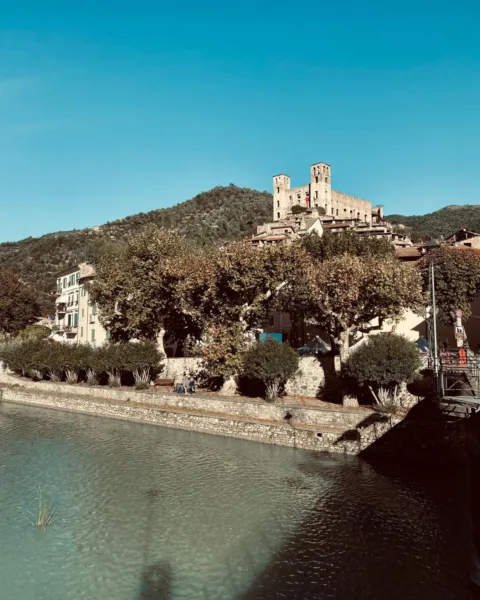
Why is Dolceacqua so wonderful? Well, it’s just so cute. You won’t need long to explore – we were only there for a day – but it sits in the Nervia Valley over a river divided by two bridges. Claude Monet famously painted one of them, the arched Romanesque bridge that leads into the unique Old Town – known as Tera – of Dolceacqua.
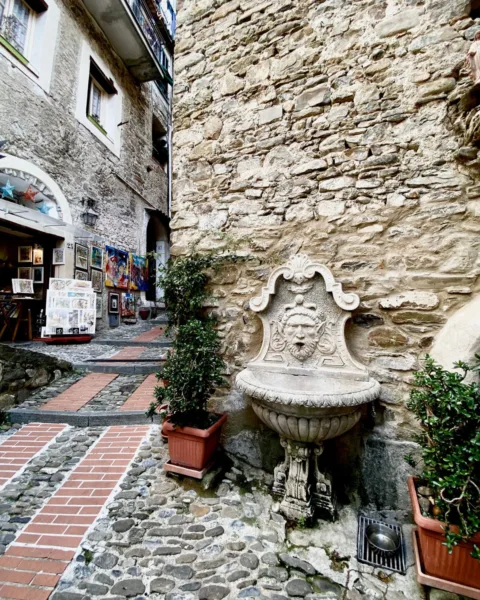
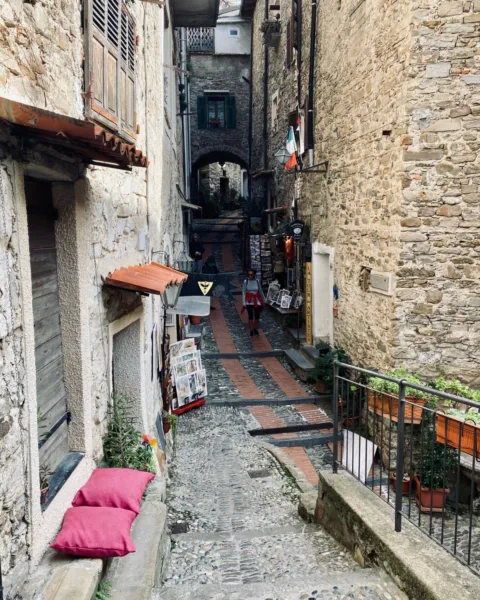
Tera, the original medieval village, is a maze of narrow, cobbled alleyways amongst well-preserved buildings squashed like sardines and towering overhead. These alleys are known as “the carugi” and are not to be missed! Eventually, and after passing dozens of art shops and cellars, Castle Doria is proudly perched on a hill overlooking the town and surrounding forest.
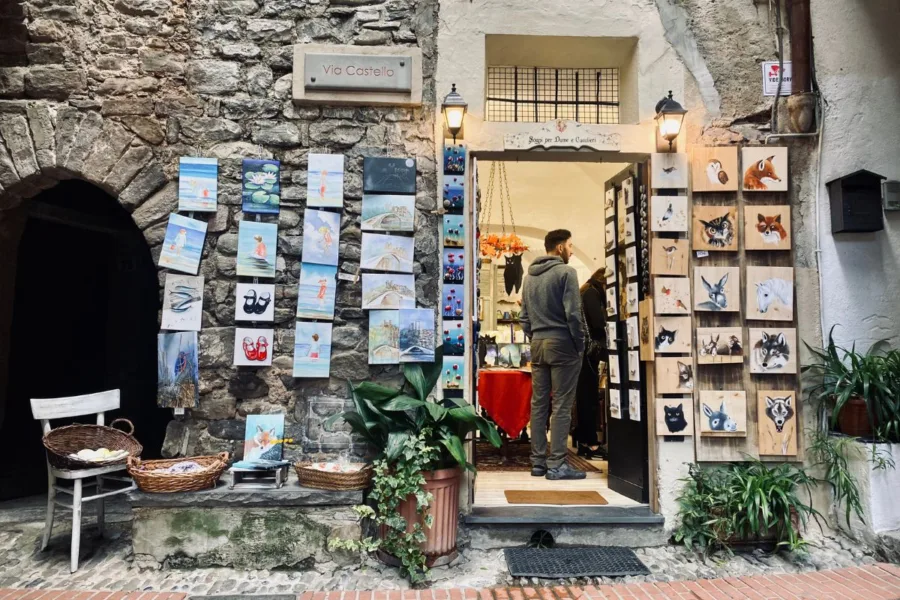
We explored both sides of the town, wandered around side streets, popped into a few wineries and finished the day with a delicious pizza. What we loved most was the authenticity of this Italian gem, the friendliness of the locals and the peaceful atmosphere.
Who Will Love Dolceacqua, Italy?
Those of you who enjoy art, history and nature will enjoy Dolceacqua. There aren’t a ton of things to do, but visit for a day, and you’ll find yourself immersed in Italian art culture, learning a little of the region’s history, tasting local wines and experiencing the best of Ligurian cuisine all while surrounded by dense forest and a soothing, flowing river.
Looking For A Day Trip?
Although I’ve aimed this guide at those of you visiting Dolceacqua independently, it’s still possible to visit on a guided tour. Most tours depart from Sanremo or Nice (France), I’ve listed the best options below for you to have a look at.
🌟 My top pick >> With this Italian Riviera full-day tour from Nice, you’ll have the chance to visit Dolceacqua and Sanremo (another town we recommend). The tour includes a stop at a local market, all transport and a professional guide.
- From Sanremo: This half-day, small-group tour (up to 6 people) provides the perfect trip to discover Dolceacqua. You’ll get to see the Castello dei Doria, admire “Monet’s Bridge,” and finish by sampling two local wines.
- Dolceacqua and the Nervia Valley: This small-group tour heads off the tourist trail to discover the tranquil Nervia Valley, including stops in Dolceacqua.
Where Exactly Is Dolceacqua
Dolceacqua is located in the Ligurian mountains in the northwestern region of Liguria in Italy. It’s about 20 minutes from the coast, which is known as the Italian Riviera. The town is nestled over the Nervia River, divided by two bridges, and surrounded by dense forests and mountains.
Dolceacqua, Italy, Map
The Best Things To Do In Dolceacqua, Italy
If I’ve convinced you to visit this adorable town (hopefully, I have), you might be interested in what you can do there. If so, I’ve listed the top things to do in Dolceacqua below.
1. Snap A Photo Of Monet’s “Bridge at Dolceacqua”

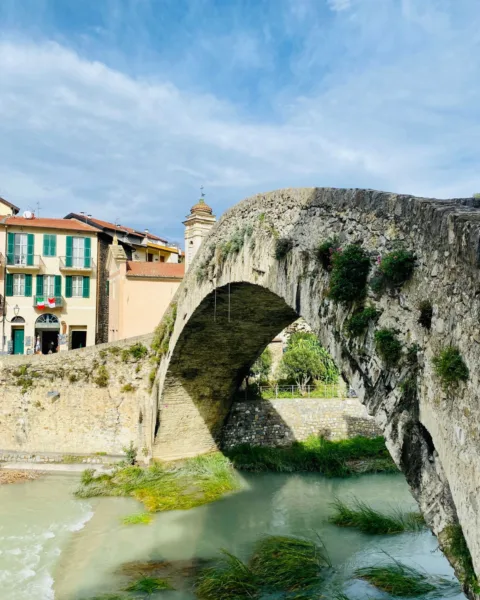
Monet described the beautiful 15th-century stone bridge as a“Jewel of lightness,” and after visiting the town, he captured the image in one of his paintings.
For us, who aren’t too clued up on art history, it was just a lovely stone bridge arched over the River Nervia that deserves a moment of your time. On the day we visited, and very luckily since it was early November, it was a bright sunny day, and Monet’s Bridge at Dolceacqua was standing in all its glory.
The bridge was built to connect Tera (the old town) to the newer part of the town (Il Borgo) and is called Ponte Vecchio, but it’s nicknamed Monet’s Bridge. Be sure to snap a photo before leaving!
2. Explore The Old Town

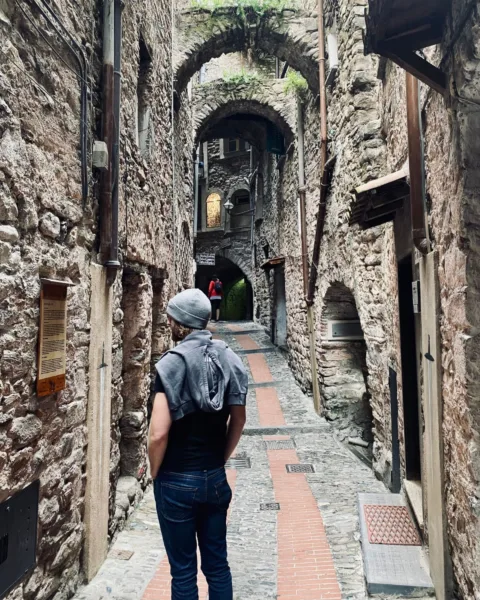
Dolceacqua’s old town (Tera) is a virtually unchanged medieval gem located at the foot of Mount Rebuffao on the east side of the Nervia River. It’s surrounded by forest and houses many of the town’s treasures, like wine cellars, local art and craft shops, and a number of cafes.
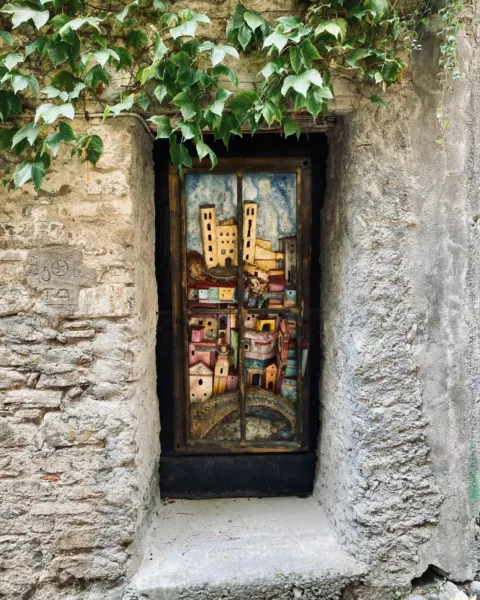
As we walked around, it was entertaining trying to navigate the small alleys in hopes of reaching Castle Doria. But getting a little lost was part of the experience. You’ll notice hanging plants, painted shutters, and bursts of sunshine. For sure, you’ll find a cat or two wandering around, and there are a number of water fountains that we felt were quite pretty.
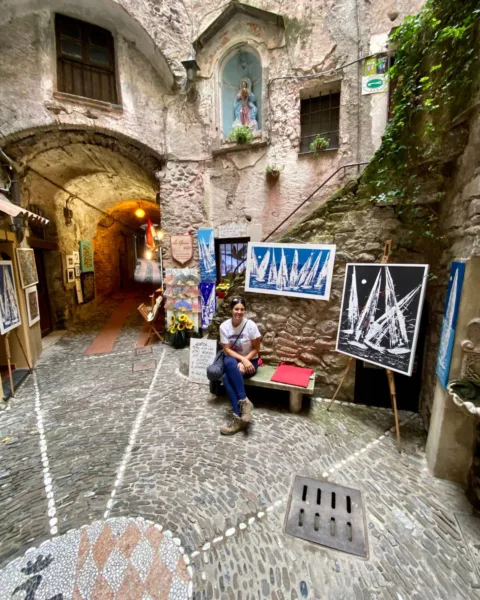
That said, there are some points of interest to watch out for. For example, a fresco dedicated to Andrea Doria was painted by Barbadirame, a friend of Picasso. There’s also the Piazzetta dell’Armatore, which appears as a central meeting point where the carugi converge, featuring a stone mosaic of the Doria coat of arms.
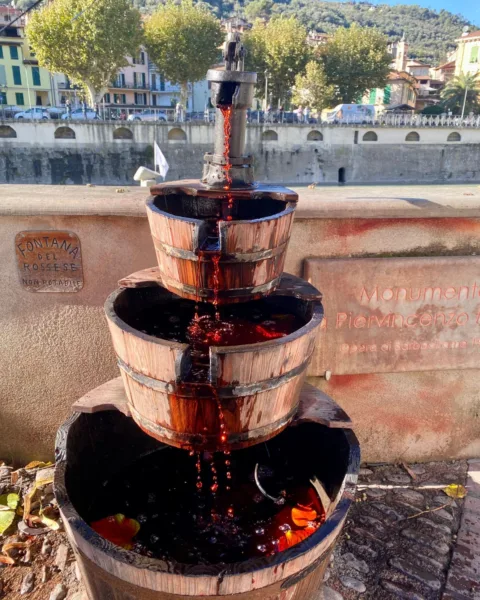
⭐ Pro tip >> Don’t miss the Fontana del Rossese (Google Maps), nestled in the corner of Piazza Mauro by the stone wall running along the Nervia River. It celebrates the DOC Rossese di Dolceacqua.
3. Visit Castle Doria (Castello dei Doria)


Ultimately, the aim is to reach the ruins of Castle Doria, an 11th-century medieval castle that interestingly once signified the border between the Liguria and Piedmont regions.
Today, Castle Doria is abandoned but once belonged to the Doria Family. It passed through various households and French and Spanish allied troops before being deserted in the 18th century, where it stood in ruins for many years.
⭐ Pro tip >> As visitors, there is little information on the castle, but you’ll find information plaques explaining the history of the Nervia Valley; most of the information is in Italian. Even so, the views are lovely, and the entrance fee is only €6 per person.
4. Do An Olive Oil Tasting
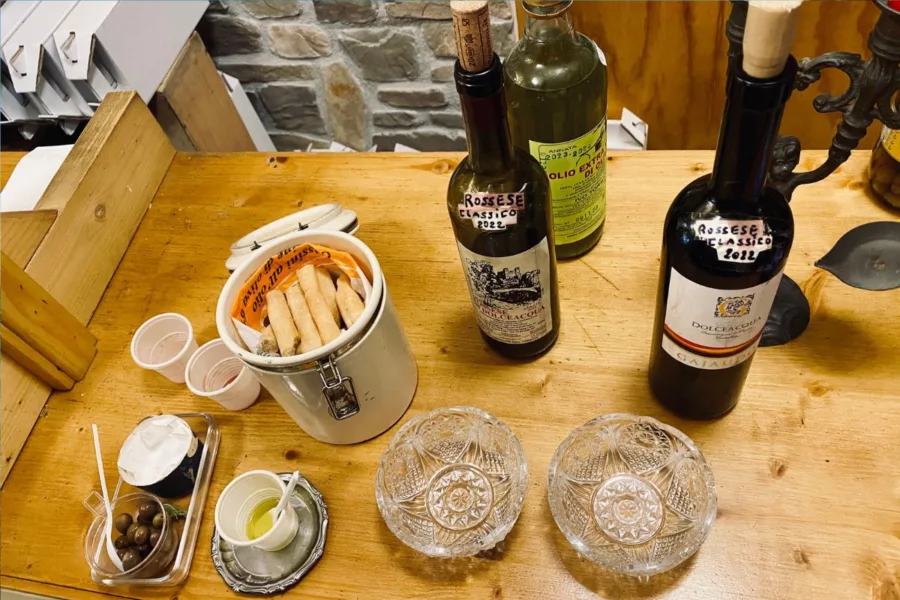
As we explored Il Borgo, we wandered into Tornatore Ivo (Google Maps), a small shop located on Via Patrioti Martiri. The gentleman inside was a fantastic, vivacious character, and within seconds, we were enjoying a (free) olive oil and wine tasting.
I mention free because, unlike France’s Alsace region, most wine tastings in Italy are chargeable.
So pretty awesome for us! It was a joyful experience when the owner, in his broken English, allowed us to sample a variety of wines and olive oils. An unexpected surprise was when he showed us around his family’s wine cellar, a magnificent room filled head to toe with ancient bottles of wine, half covered in dust.
If you’re in Dolceacqua, I highly recommend stopping by Tornatore Ivo to experience this wonderful shop.
5. Enjoy A Glass Of “Rossese di Dolceacqua”

Following the above, we purchased a bottle of Rossese Di Dolceacqua, which is produced in Dolceacqua. It was delicious.
For any wine lover out there, the Rossese Di Dolceacqua is made from the Rossese grape and cultivated in the Alpine Valley. The grape is rarely seen outside of the Mediterranean Alps. Usually ruled by light-bodied whites, the DOP/DOC is one of Liguria’s most famous reds.
⭐ Pro tip >> Ensure you sample a glass of the town’s iconic red by checking the bottle’s label for at least 90% Rossese grapes. The Regional Enoteca is an excellent place to head for more information about the region’s wines.
6. Visit A Local Vineyard/Winery

One activity we should have done was a vineyard visit. Knowing what we know now about the area’s prestige wines, a vineyard tour would have been an excellent activity to do in Dolceacqua, Italy. However, there are plenty of wineries to visit, such as Maixei (Google Maps), Testalonga (Google Maps) and, of course, Azienda Agricole Mauro Zino (Google Maps) within the town itself.
⭐ Pro tip >> Outside of the central hub, a few vineyards to consider visiting include Tenuta Ascari (Google Maps) and Terre Bianche – also a hotel (Google Maps).
7. Try The Local “Michette” Sweet Buns
These sweet buns, which originated from Dolceacqua, come with a grave story, best explained here on Bread, Cakes and Ale. The sweet bread is a delicious, dense bread that is perfect for indulging.
The breads were originally made for celebration feats on the Day of Assumption but have since grown in popularity. Today, you can buy them all year round, and you’ll find them in most bakeries throughout Liguria. In Dolceacqua, head to Pasticceria Desir de Roy for all things baked.
8. Market Day At Dolceacqua
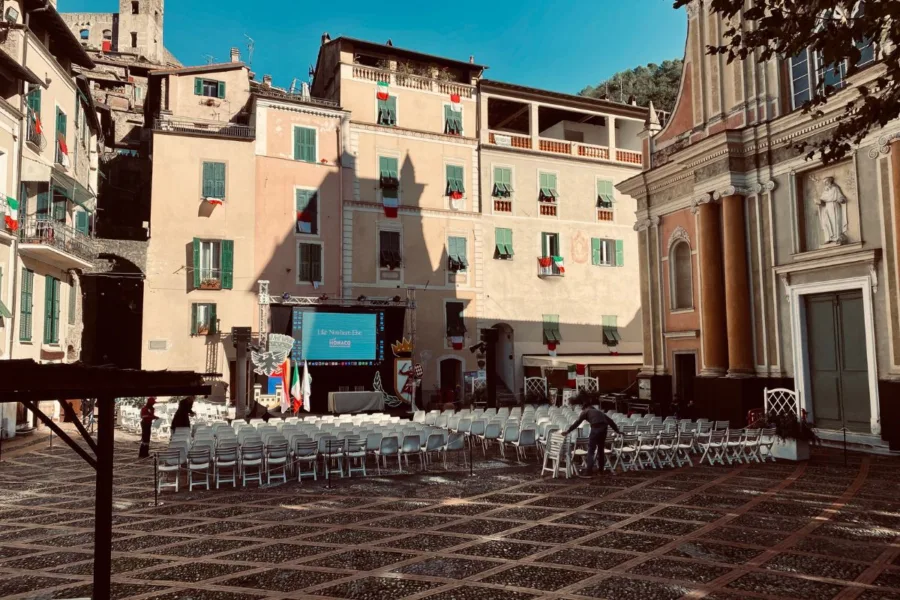
Of course, Dolceacqua has a market; it wouldn’t be a quaint Italian town if it didn’t. During our eight weeks of tripping around Italy, we sought out many markets; however, we didn’t time it right for Dolceacqua and missed their monthly market.
However, if you happen to be visiting the area around the last Sunday of every month, then you’ll be in for a treat. This is when Dolceacqua holds its market, and from what I’ve read, expect stalls filled with local cheeses where sampling is a must. Organic fruit and veg with handwritten signs noting where it’s come from, wines, meats, pastries and some of the best (supposedly) homemade marmalades and jams using blueberries from the Alps!
I mean, yum! All the reasons I love a market.
⭐ Pro tip >> The main market is held in Piazza Mauro and also features local handicrafts; however, keep in mind that over the road at Piazza Garibaldi, there is an antique market that is also worth passing by.
9. Stop For Pizza At La Dolcevita
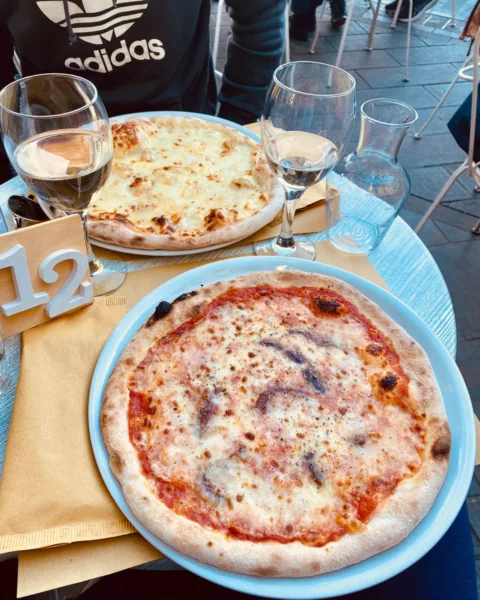
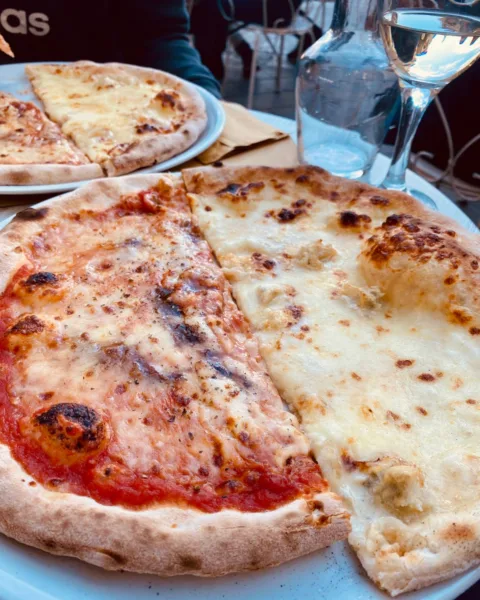
Before we left Dolceacqua and Italy (Dolceacqua was our final stop before driving over the border to France), we made a stop at La Dolcevita Bar Pizzeria (Google Maps). It’s on the high street setback on Piazza Giuseppe Garibaldi and is a fantastic laidback spot to enjoy a scrumptious pizza and glass of wine.
We sat outside and were lucky to nab a lunchtime table without having to wait too long. It was a sunny spot, to begin with, but by the time we had finished, the last of the autumn sunshine had passed behind the buildings, and it became a little chilly. If you’re visiting later in the year, I suggest taking a cardigan or jumper.
It’s affordable, too. With two large pizzas and a 500ml carafe of house white setting us back less than €30, we were very pleased…and full! The service was a little slow, but the restaurant was full; nevertheless, our waiter was friendly, and we were in no rush, happy to take in the scenery.
10. Visit The Churches
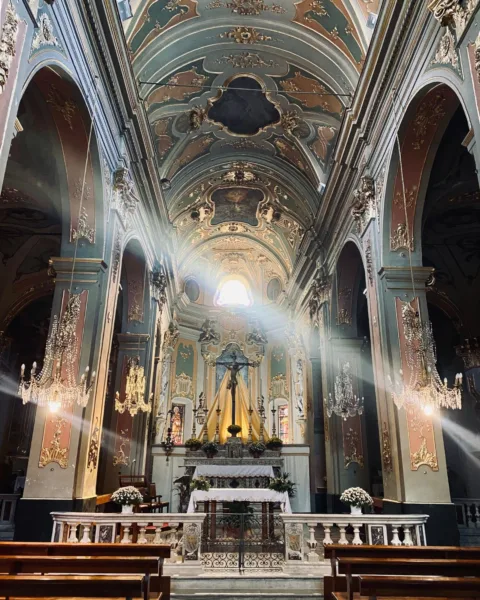
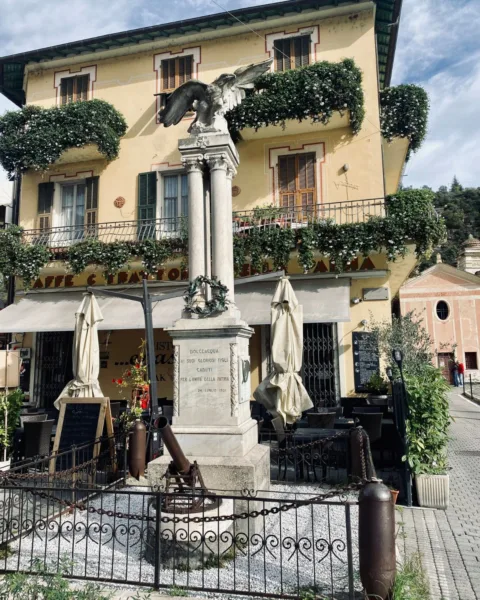
There are two main churches in Dolceacqua. The biggest and most popular is the Parish of Saint Anthony Abbott, a lovely 15th-century church with original stone walls, a Bell Tower, and a colourful baroque facade. I don’t know much about architecture, but I have read that it was “rebuilt in baroque style and adorned with rich internal decorations.” It was lovely and colourful, and there were a lot of paintings and statues inside; I also noticed a wonderful organ.
The second church is a more modest sanctuary; although we didn’t enter it, the outside is a lovely light pink often seen around Liguria and the Italian Riviera. Some other churches worth visiting outside of the town are the Oratory of San Sebastian, the Sanctuary of Our Lady of Sorrows, and the ancient church of San Giorgio.
Our Experience At Dolceacqua, Italy
I thought it would be nice if I quickly ran through our visit to Dolceacqua so you know what to expect, as it might help you plan your trip. Firstly, we approached from the north, having passed Dolceacqua the day before deciding to spend the night and the subsequent morning in a small village called Pigna.
Pigna was great, by the way, and it is certainly worth visiting if you have the time.
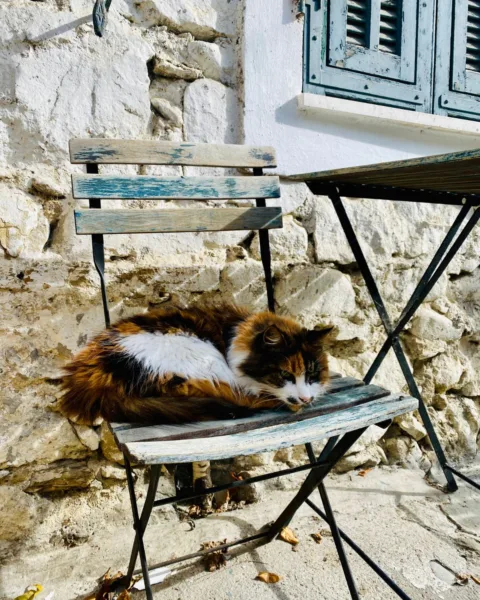
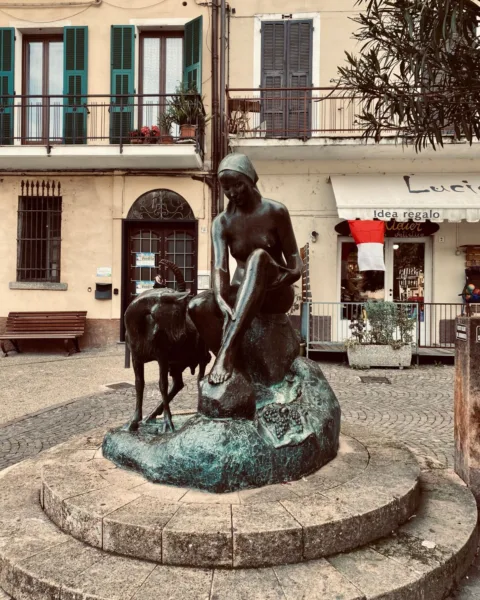
When we arrived in Dolceacqua, we spent the afternoon walking around the old town. We spent about two hours strolling through the carugi, popping into art shops, exploring forgotten lanes and wine cellars, and stopping by the Parish of Saint Anthony Abbott before reaching Castle Doria.
You’ll need another hour to explore the castle and wander back down to Piazza Mauro. From here, you’ll want to take a walk over Monet’s bridge – the famous Ponte Vecchio. It’s charming, and there’s even a spot along the river that indicates where Monet would have sat while painting.
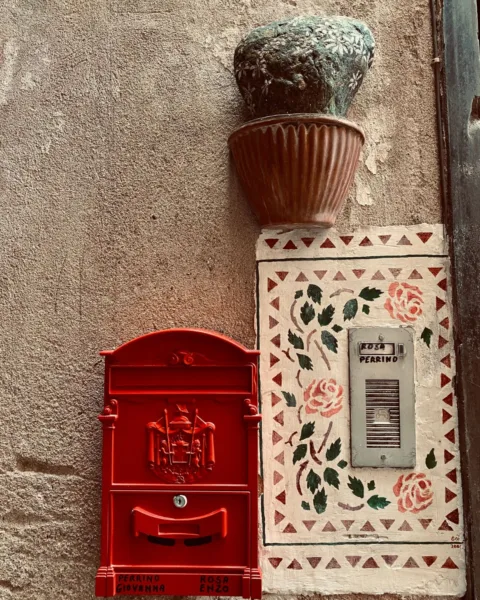
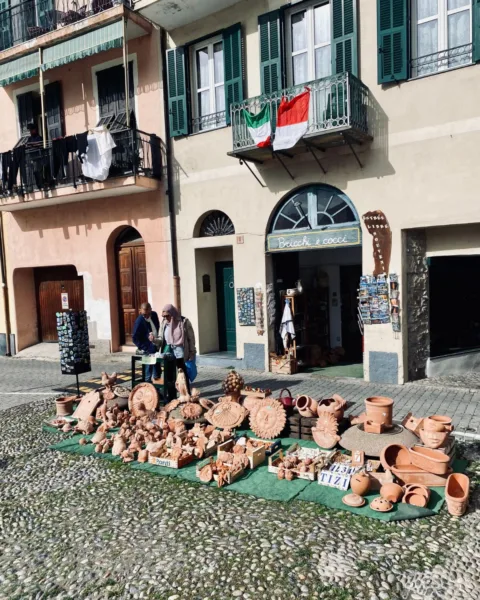
Afterwards, spend another half hour exploring the rest of the town. Definitely make a stop at Tornatore Ivo and purchase one of his bottles of the Rossese di Dolceacqua or two! I wish we’d taken more home, and since you’re there, you might as well grab some olive oil…
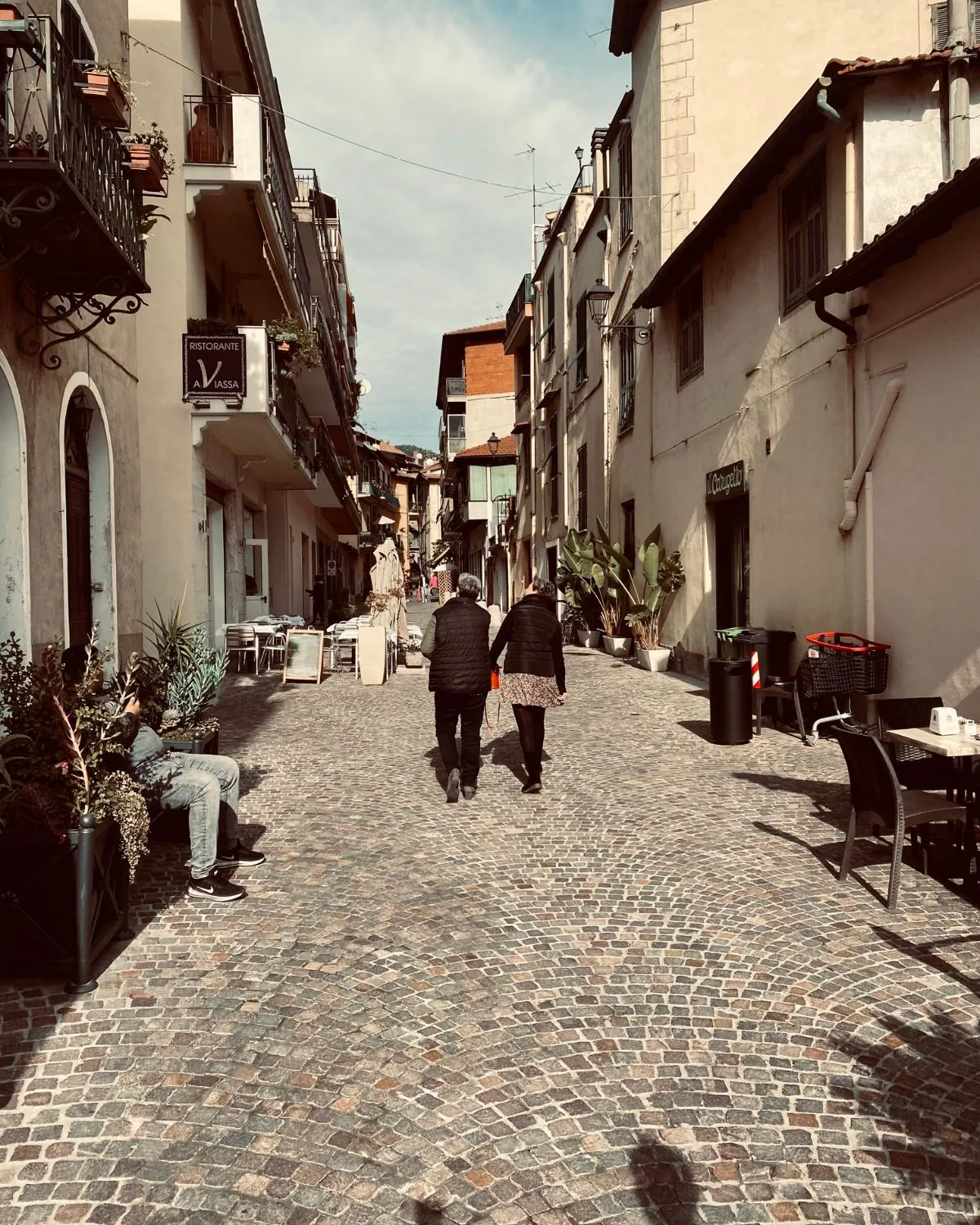
Finally, stop by the best pizzeria in town – La Dolcevita Bar Pizzeria; however, if you want to try some traditional Ligurian cuisine, head to Ristorante A Viassa instead.
Additional Activities
For the rest of the day, I recommend visiting one of the nearby vineyards. Even though we didn’t do this in Dolceacqua, we love vineyards, and it’s certainly an activity worth adding to the itinerary!
Multiple nature walks start from Dolceacqua and take you into the hills, around the vineyards, and to several chapels. For more information, check out Komoot here. Adding a hike to your itinerary is another excellent way to explore the area. We did the High Path in Cinque Terre, and the views over the Riviera were superb.
How Long Should You Stay?
If you want to include all the above activities, you’ll need at least a day and a half in Dolceacqua, potentially two days, depending on how long your hike is. Otherwise, we spent a day, which was actually more than half a day since we were in Pigna in the morning. A day is certainly enough time to visit the town and a vineyard.
Planning Your Trip To Dolceacqua, Italy
Are you ready to book your trip? I’ve put together a quick travel guide to help you plan! This includes practical information on getting to Dolceacqua, ideas on where to stay, where to eat and when to visit.
How To Get To Dolceacqua?
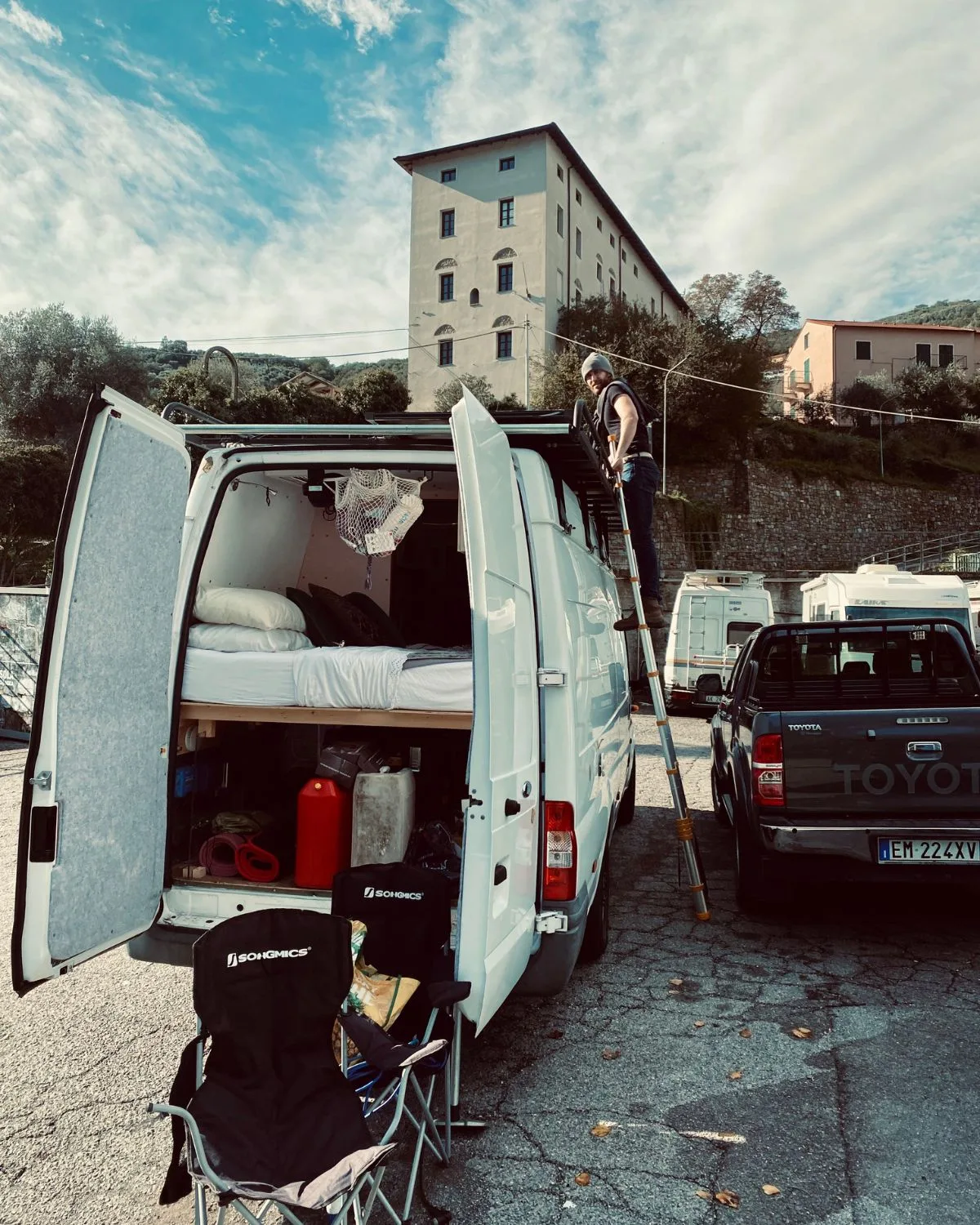
We were in our campervan, which made getting to Dolceacqua super easy, and if you have a car, it’s certainly the easiest way to get there. If not, I recommend renting a car if you don’t have your own. This is the best way to explore the region, especially since many of the villages are pretty remote.

👉 Car Rental: DISCOVER CARS
We use DISCOVER CARS when looking for an overseas car rental. They compare hundreds of dealerships and have zero hidden charges.
SELF DRIVE
Dolceacqua is easily accessible from the motorway, which runs along the coast. If you’re coming from Genoa, it’s about 170 km and should take around 2 hrs 40 mins along the A10/E80. Exit Ventimiglia at E74 and take SS20. Take SS20 and SS 1 to SP64 in Dolceacqua.
There are plenty of parking spots; most are less than 5 minute walk to the centre.
TRAIN
The Italian Riviera has a good train network, and most towns along the coast are connected. However, since Dolceacqua is inland, you’ll need to travel by bus to get to the final leg. The train you need to get is the one taking you to Ventimiglia train station, which is about 10 km away.
BUS
As for the bus, the Rivera Transporti Line 7 will take you from Ventimiglia to Dolceacqua. If you prefer to use the bus for the entire journey, Flexibus serves Liguria and runs various lines throughout the region.
PLANE
The closest airport to Dolceacqua is actually in Nice. It’s around 50 km away. However, if you prefer an Italian airport, you’ll want to fly into Genoa.
BOOKED EXCURSIONS
🌟 My top pick >> With this Italian Riviera full-day tour from Nice, you’ll have the chance to visit Dolceacqua and Sanremo (another town we recommend). The tour includes a stop at a local market, all transport and a professional guide.
Helpful Accommodation Ideas
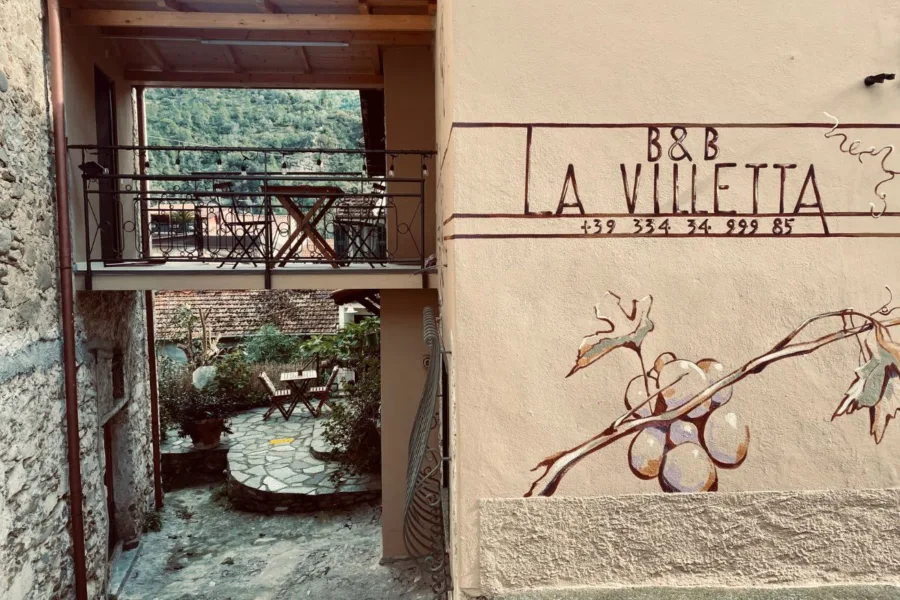
Dolceacqua has plenty of accommodation options, from bed and breakfasts to apartments and guesthouses; however, you won’t find typical hotels. This is a more intimate town, cute and cosy, perfect for an authentic Italian escape.
- Le Bijou di Dolceacqua (2-bed apartment from £129/$164): Check and review prices on Booking│ Book a room on Agoda.
- DUSSAIGA – Camera Del Fiordaliso (double room from £74/$95): Check and review prices on Booking│ Book a room on Agoda.
- La Casa di Anetì (1-bed apartment from £62/$79): Check and review prices on Booking│ Book a room on Agoda.
- B&B La Villetta (1-bed apartment from £86/$110 -min 2nights): Check and review prices on Booking│ Book a room on Agoda.
Where To Eat And Drink?
Again, there are loads of places to eat and drink. I’ve mentioned a couple above; however, there are a few others that are highly rated.
- La Pasta Di U (££): This is a nice restaurant for a quick pasta meal. It offers hearty portions, good prices, and friendly service.
- Ristorante A Viassa (££): The service, quality, and taste of the food are wonderful, and the place has a nice ambiance and serves traditional dishes.
- Il Lupo – Smoke & Grill (££): Amazing restaurant with highly praised food and service
- Casaebottega (££): Come highly recommend with large portion sizes and friendly service.
- I Gumbi (££): Typical Ligurian dishes with super friendly service, tasty food and great location – try the fixed menu.
When Should You Visit?
The summer months are always considered the best time to visit the Italian Riviera in terms of the best weather conditions; however, there are some drawbacks to visiting this time of year. Summer is a busy period and is more expensive; August can be exceptionally crowded since this is when Italians take their summer holidays.
If you want guaranteed good weather, the summer months are best, but consider the shoulder seasons, which include late spring and easy autumn. You’ll likely still receive lovely weather; however, it’s going to be less crowded and a little more affordable, such as in accommodation prices.
We visited in November and were lucky to have a wonderfully bright and sunny day. However, there is a higher chance of rain. September and October would be less risky, as would April and May.
For a complete weather guide to Italy, we’ve written a month-by-month guide here.
Don’t Forget Travel Insurance!

👉 Travel Insurance: SAFETYWING
Jack and I use SAFETYWING to book our travel medical insurance when we are overseas. It’s important to us as it ensures a safe trip.
✔️ Flexible, continuous coverage can be bought before you depart or at any point during your journey abroad.
✔️ Can be very affordable.
(High-risk sports activities not generally included – Check out World Nomads instead)
Resources For Italy
Is it your first time visiting Italy? We’ve written lots of useful posts to help you plan your trip. You can check them all out on our Italy Page here, but below are some of our most popular articles:
- If you’re on the Italian Rivera, you may be heading to Cinque Terre; find out what we thought.
- We loved road-tripping around Italy. Consider visiting Piedmont with this 7-day itinerary.
- Read this post if you’re heading to Florence and want a good food tour to do!
- While there, maybe you want to pop over to Pisa? Here are the best day trips from Florence.
- Read this post if you want to visit Lake Maggiore; it’s our favourite Italian lake.
- While there, visit Stresa for the day and then hop over to the Borromean islands.
⭐ Pro tip >> If you’re going to be using your phone, don’t forget about overseas data roaming. You’ll get charged for using your data. Try Airalo’s eSIMs and download a digital data pack. It’s quick and easy; great if you’re in a hurry.




In Summary: Visiting Dolceacqua, Italy, Guide
As always, I like to finish these articles with a few of my final thoughts about visiting Dolceacqua and why it’s a town worth adding to your itinerary. Although we only spent a day there, it really stole our hearts. It’s a lovely place oozing with authentic Italian culture, a sense of peace, and a beautiful old town dominated by the castle. It feels quite magical.
Its location, nestled within the forests and over the river, which is a lovely pale turquoise, adds to its allure. If you love nature, like we do, then it becomes the perfect spot to enjoy a meal while listening to the birds. I only wish we had stayed longer!

Explore & Discover More
Come and join our socials and keep up to date with the latest adventures. Find the latest travel photos and blog updates, ask questions and get travel inspiration.
✔️ FIND ON INSTAGRAM
✔️ JOIN US ON FACEBOOK
