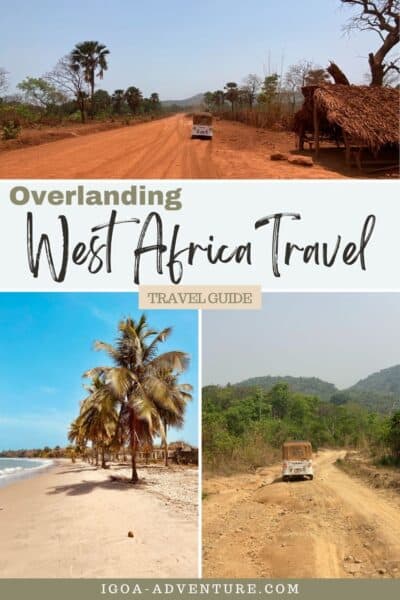

Overlanding West Africa is a dream trip for many adventure travellers. I know it was something I had on my bucket list for years!
When the time came, I took a two-and-a-half-month road trip from Sierra Leone to the UK with my dad.
It was my first time overlanding West Africa, but luckily, my dad had done this trip a number of times. That was reassuring, but even so, there are just some things no one can prepare you for!
In this guide, I’m sharing everything I learned from my West Africa overlanding trip, going independently and on a budget.
If you want to know what to expect and how to plan your trip – right down to fuel costs, visa and vehicle documentation, safety, politics, and border crossings – keep reading.
This is the ultimate guide to a road trip through West Africa!

An Overview Of Overlanding West Africa

I had this idea in my head of how it would be, but the reality was far from it.
We were as prepared as we could be: route selected, vehicle serviced, apps downloaded; we even had a contingency for bribes.
But we took the approach of “let’s just see how it goes.” And really, with places like West Africa, no matter how much planning you do, things rarely go to plan.
I also want to mention that we did this road trip in a tuk-tuk!
That was not the original plan. I had expected to buy a vehicle in Europe and drive down to Sierra Leone. The reality was much, much different.
However, in every sense of the word, it was spectacular.
We left Sierra Leone in April during the dry season – there is no way in hell we would have made this trip during the wet season, and I don’t recommend planning your trip during that time either, even if you’re driving a 4×4.
We drove through Sierra Leone, crossing up-country instead of the main border crossing (for reasons I’ll explain later). We travelled into Guinea, Senegal, The Gambia, Mauritania, Western Sahara, and Morocco before driving through Spain and France to reach home.
If you’re interested in my full overlanding West Africa itinerary, it’s here.
That said, if you don’t fancy doing the driving, but still want to experience the journey, there are plenty of overlanding West Africa tours, and West Africa travel packages available online.
🚑 DON’T FORGET TRAVEL INSURANCE!
SafetyWing is a fantastic travel medical insurance that is super affordable and great for backpackers. You can purchase a policy before or after your travels begin. 🤗

Considerations Before Overlanding West Africa

- What’s your main goal for overlanding West Africa?
Are you chasing a scenic adventure, cultural experiences, or a mix of both? Figuring this out will help shape your route, destinations, and overall planning. - How much time do you have?
Will this be a short trip or a long-haul adventure? Your timeframe will impact how far you can travel, how many countries you can visit, and how flexible your itinerary needs to be. - What type of vehicle suits your trip?
Contrary to common belief, it is not necessary to have a 4×4 to drive through West Africa. I mean, it helps, certainly, but if we can do it in a tuk-tuk, then any vehicle will work! Think about the number of people travelling, luggage space, and whether you’ll be navigating off road or sticking to main roads. - What’s your budget for overlanding West Africa?
How much are you willing to spend on fuel, accommodation, and activities? Having a clear budget will help you decide whether to stick to main routes or explore off-the-beaten-path areas and whether you opt for campsites, hotels, or budget stays. - What time of year are you going?
West Africa’s wet season can be brutal. Roads become impassable, and travel slows to a crawl. Keep in mind, the dry season differs from North West Africa to further south. - Do you want to pre-plan everything or be spontaneous?
Your travel style will impact how rigid or flexible your plans are. However, for overlanding West Africa, flexibility is key, and a strict itinerary will rarely work.
What is Overlanding?
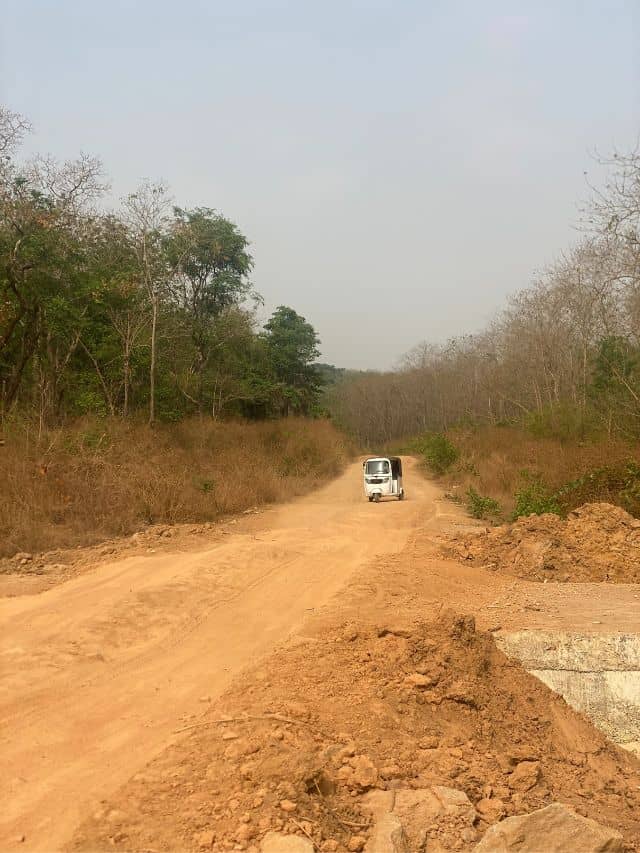
Overlanding is all about self-reliant, long-distance travel, typically by vehicle, with a focus on the journey rather than the destination.
It’s not just a road trip – it’s an adventure that takes you across borders, through remote regions, and into cultures that many travellers never experience.
Overlanding in West Africa can be unpredictable, challenging, and at times exhausting – but it’s also one of the most rewarding ways to explore the region.
Overlanding West Africa Step-by-Step Guide
Summary of the below and my ultimate guide to the best Overlanding West Africa:
- Step 1: Length of Trip & Route Planning
- Step 2: Choosing a Vehicle & Breaking Down
- Step 3: Visas & Documentation
- Step 4: Border Crossings
- Step 5: Accommodation Types
- Step 6: Booking Attractions & Excursions
- Step 7: Budgeting
Step 1: Length of Trip & Route Planning
✔️ Decide on your timeframe – short trip or extended overland journey.
✔️ Check the latest road conditions and border crossing updates.
✔️ Plan alternative routes in case of road closures or issues.

Your overland trip through West Africa is going to be a once-in-a-lifetime experience, no matter your itinerary or how long you go for.
However, having a rough timeframe and route will make logistics much more manageable.
You don’t need to stick to your plan exactly, but doing some research beforehand will help you figure out key stops, attractions, and how long you might want in each place.
I like to look up major cities, national parks, and any must-see spots along the way – this gives me a good idea of how much time I’ll need in each location.
Once you have a rough timeframe, planning a route becomes much easier.
If you’re unsure, I’ve found that larger cities usually deserve a couple of nights, while smaller villages often only need one night or even a quick stopover.
The Best Route Planning Apps
iOverlander
This was by far the best resource while overlanding West Africa. I usually recommend Google Maps, but since West Africa is such an offbeat destination, iOverlander was much more helpful – especially for finding accommodation, garages, and border crossing info.
Google Maps
Even though Google Maps isn’t always accurate off-road, it’s still useful for planning. Main roads, attractions, and cities are well-mapped, and you can calculate rough drive times between destinations.
By doing this for every leg of your journey, you’ll get a better idea of how much time you’ll spend driving versus exploring. Just keep in mind that shortcuts on Google Maps don’t always exist in real life!
A Flexible Route is Best
Before setting off from Freetown, we had a route in mind, but nothing was set in stone.
We knew key locations and roughly how to get there, but in Africa, there’s always some reason why you suddenly can’t take a particular road – blocked routes, detours, or (as we found out) a tuk-tuk simply not being ‘allowed’ in certain places!
We also encountered surprises: new roads that weren’t on the map, ridiculous diversions, roads that were supposed to exist but didn’t, and of course, our own genius shortcuts that didn’t quite work out.
These moments always made the trip more eventful!
The point is, as much as I love a good plan, flexibility is key. Think of your itinerary as a guide, not a strict schedule.
The best road trips allow room for spontaneity – whether it’s a detour to a beautiful beach, an unplanned overnight stay in a remote village (this happened to us in Guinea), or simply rerouting because the ‘road’ has turned into a river. It’s all part of the adventure!
Beware of Road Conditions

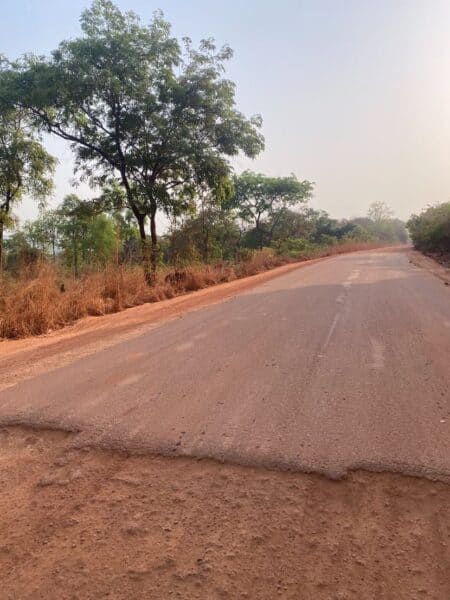
Expect the unexpected. Words to live by when it comes to overlanding West Africa. Unless travelling along the main coastal road, which I found to be in good condition, road conditions vary drastically.
One minute you’ll be on a lovely smooth road, it will be a road with endless potholes. Sometimes the “blacktop”, the local word for tarmac, has completely eroded away, and you’ll be left driving along roads half dirt and half still tarmacked.
Expect dirt tracks and sandy trails, especially if you divert from main routes, or sand dunes if you’re going off-road and deeper into the Sahara. River crossings are common, expect makeshift passenger platforms, which are really very unsafe, but nevertheless a fun experience.
We got stuck in the sand at one point, which, considering the journey we had, wasn’t bad at all. It was only once, plus we never broke down! I ended up having to push the tuk-tuk out of the sand while my dad did his best to manoeuvre us out; luckily, we achieved freedom relatively quickly.
Pro tip >> Once regarded as the most dangerous border crossing in the world, no man’s land between the Mauritania and Western Sahara border is now fully paved and easy to cross.
Where to go on a West Africa Road Trip?
I went from Sierra Leone to Morocco, which is one of the most popular Africa overland routes. We made lots of stops, although I would love to go back and explore the countries in more depth:
- Morocco
- Western Sahara
- Mauritania
- Senegal
- The Gambia
- Guinea
- Sierra Leone
If you’re looking at ways to plan your itinerary, check out my guide!
Enjoying this blog? All my content is free, but I do spend a lot of time in coffee shops. If you’re finding my content helpful and would like to buy me a coffee, I’d love that! Thank you 🤗
Step 2: Choosing a Vehicle & Breaking Down
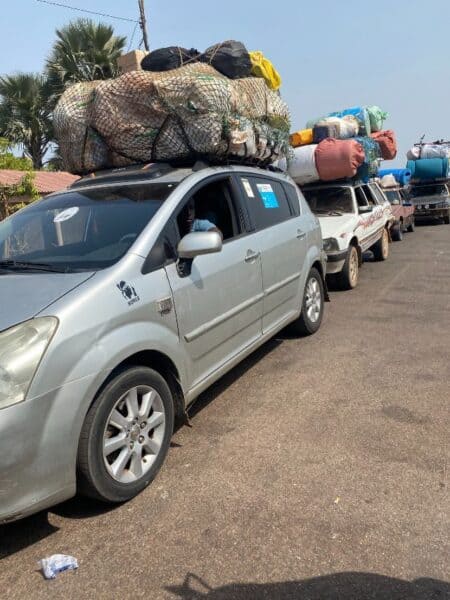
✔️ 4×4 vs. standard car vs. motorbike vs. tuk-tuk – each has its pros and cons.
✔️ Make sure your vehicle is serviced and road-trip ready.
✔️ Carry spare parts and essential tools – breakdowns are common
✔️ Download offline maps and vehicle repair guides.
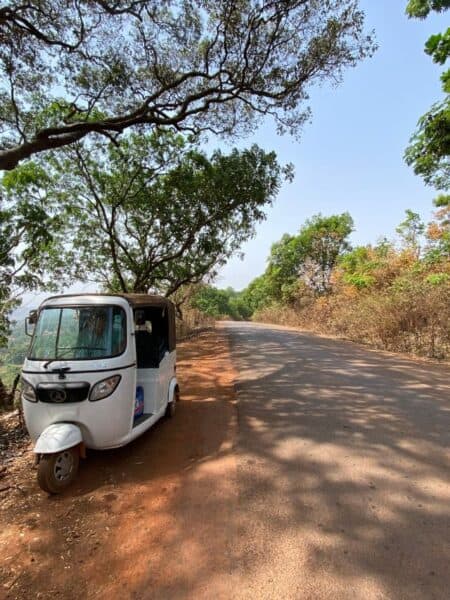
Everyone says you need a 4×4 to overland West Africa. That couldn’t be further from the truth. If you plan to go deep into remote regions or off-road frequently, then sure, a 4×4 is essential. But if you’re mostly sticking to the main coastal roads, you don’t need one.
We covered at least 4,000–4,500 miles (6,400–7,200 km)—probably more with all the detours—in a tuk-tuk. We went off-road in Sierra Leone (I still can’t believe we managed it!), Guinea and Senegal, which was how we entered The Gambia illegally through a porous border.
The only place we didn’t take the tuk-tuk was deeper into Mauritania. Instead, I left my dad driving along the coast while I took a side trip inland. I hopped on a local minibus and then hired a guide with a sedan to drive us through the desert.
Most locals drive around in sedans, and honestly, they handle the terrain surprisingly well. The tuk-tuk wouldn’t have made it through the sand, but the sedan had no issues.
So, if you’re dreaming of overlanding West Africa but don’t have a 4×4, don’t stress. It’s totally doable! There will be some areas you can’t access, but a hatchback can still get you to many attractions and countries.
Choosing the Right Vehicle
Ask yourself:
- How many people are travelling with you?
- How much luggage will you be taking?
- What type of roads will you be driving on?
- How important is comfort to you?
- Are you planning to sleep in your vehicle?
- What is your budget?
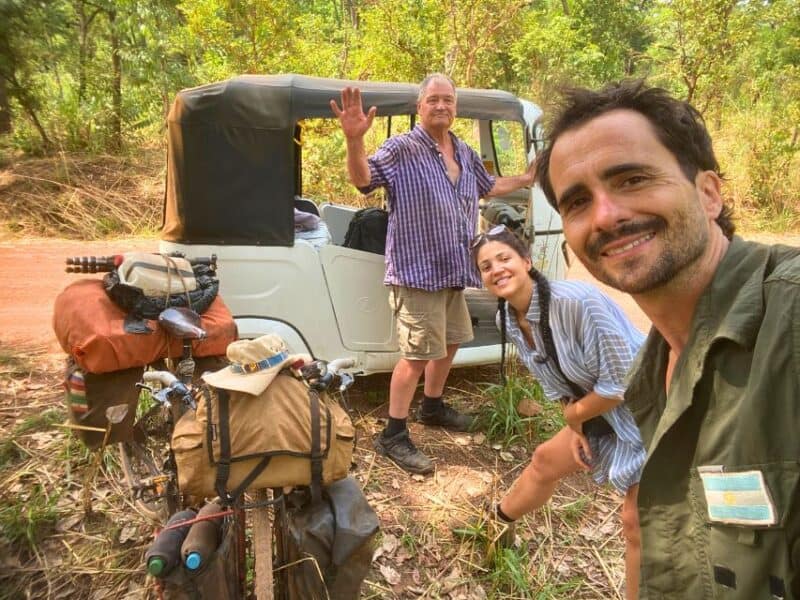
In Western Sahara, especially around Dakhla, I saw loads of campervans. The roads in Morocco are excellent, so even large vehicles manage fine. But I wouldn’t recommend taking a campervan further south, the conditions get rougher.
A motorbike is another solid option. A lot of people were overlanding West Africa by motorbike when we were there. In a way, it’s similar to our tuk-tuk, it’s just a three-wheeled motorbike, after all! We even passed cyclists pushing themselves to ride all the way to South Africa…that’s another frickin level of commitment!
Keeping Your Vehicle Road-Trip Ready
Whatever vehicle you choose to overland West Africa, remember you’ll be spending a lot of time in it, so it needs to be comfortable. A fuel-efficient vehicle is ideal for covering long distances.
Before setting off, make sure your ride is in top condition:
- Get a full service and tyre check.
- Ensure you have enough storage space for luggage.
- Carry spare parts and essential repair tools.
The iOverlander App is an absolute lifesaver for locating garages, ordering spare parts, and finding mechanics when things go wrong, because trust me, at some point, they will go wrong.
Step 3: Visas & Vehicle Documentation
✔️ Many West African countries require visas—some are easier to get at the border, others need to be arranged in advance.
✔️ Vehicle insurance is necessary to enter some West African countries.
✔️ Carry multiple copies of your passport and vehicle documents.
✔️ Know the rules for the Carnet de Passage and Laissez-Passer (if required).
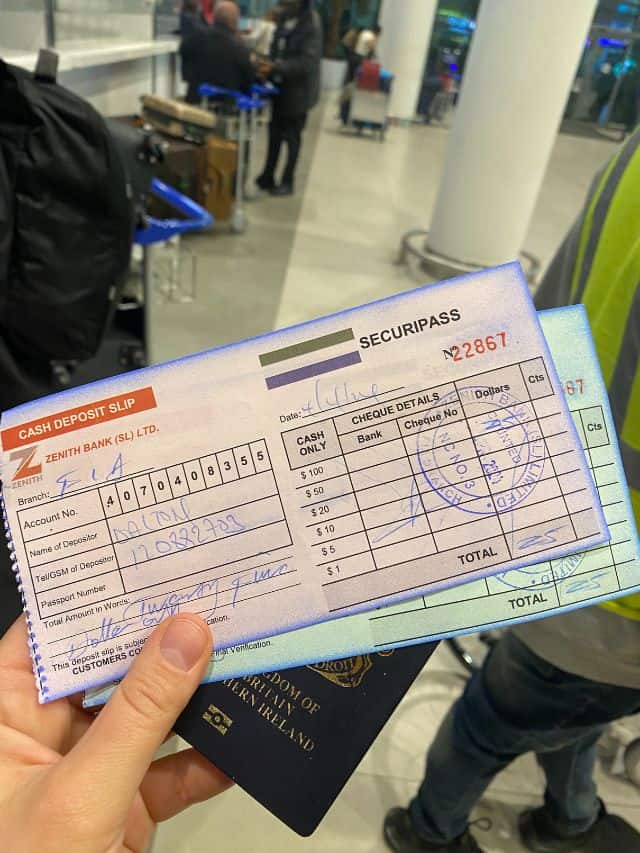
The majority of this information is based on holding a UK passport.
For all other countries you’ll need to check your official government website. That said, I also advise UK passport holders to double-check visa requirements as they are constantly changing.
Morocco & Western Sahara
UK visitors don’t need a visa and can stay for 90 days.
Mauritania
It is no longer possible to obtain a visa on arrival in Mauritania. Before you travel, you must apply for an e-visa online.
Mauritania has loads of checkpoints and you’ll be asked for a ‘fiche’ at each one. This is a photocopy of your passport. I recommend making multiple copies. If you run out, you’ll have to wait for the officer to write down all your passport information, and sometimes they take photos.
Senegal
UK citizens can visit Senegal without a visa for up to 3 months. You might need to show border officials evidence of return or onward travel and proof of your arranged accommodation.
The Gambia
You do not need a visa to visit The Gambia. You’ll get a stamp in your passport that allows you to stay for 28 days when you arrive.
Guinea
You must pre-apply for a visa to visit Guinea, if approved, you’ll get up to 90 days. Make sure you apply for the correct visa – British nationals have been refused entry with the wrong one.
You can apply online for an e-visa. You must apply several days in advance and upload scanned documents, including a yellow fever vaccination certificate.
Sierra Leone
You can get a visa at the border, it costs USD $80. You can also pre-apply online. A yellow fever certificate is also necessary.
Pro tip >> It’s important to make sure you get your stamp at each border crossing. If you don’t have a stamp when exiting, it can be costly.
Vehicle Documentation and Insurance
Since our tuk-tuk was registered with Sierra Leone, which is part of the ECOWAS (Economic Community of West African States), our insurance was covered by Brown Card insurance.
However, generally speaking, to overland West Africa in a EU vehicle, you’ll need to present the original vehicle registration documents, insurance certificate, and passport to the customs officer and in some cases, complete the vehicle admission form.
- A passport.
- Your vehicle ownership document (‘V5’ in the UK).
- Motor insurance covering the countries you’ll be visiting.
- Photocopies are not acceptable.
Insurance can be troublesome. It’s critical that you have valid insurance; otherwise, you will expect to pay hefty fines. When overlanding West Africa, your vehicle must have relevant and current 3rd party insurance.
For Morocco, sometimes you can get a Green Card, which you usually obtain from your insurance company. If not, you’ll need to buy local insurance, which is sold at the port before arriving in Morocco. Customs will grant you temporary importation and you’ll be handed a small ‘document of import’ slip. It’s important not to lose this as you’ll need it when exiting the country.
For the rest of the countries, you can get a Brown Card endorsement once you’ve purchased insurance in any one of the ECOWAS countries, or so I’ve read. You’ll then be eligible for the Brown Card endorsement. Any company that offers motor insurance in any of the 14 countries below should be able to sell you Brown Card insurance.
Pro tip >> ECOWAS (English) or CEDEAO (French) currently has 15 member states. The following 14 states participate in the Brown Card insurance system. Benin, Burkina Faso, The Gambia, Ghana, Guinea, Guinea-Bissau, Cote d’Ivoire, Liberia, Mali, Niger, Nigeria, Senegal, Sierra Leone and Togo.
The Carnet de Passage (CPD) Vs. Laissez-Passer
Although we did not use one, I’ve been reading about the Carnet de Passage.
The CPD is basically a passport for your vehicle. It’s a customs document that allows you to temporarily import your vehicle into certain countries without paying import duties.
Instead, we utilised the Laissez-Passer. It’s not the same, though they both relate to vehicle entry into a country.
Carnet de Passage (CPD)
- Acts as a passport for your vehicle, allowing temporary importation without paying import duties.
- Required in some African, Asian, and South American countries (e.g., Ghana, Nigeria, Kenya).
- Issued by automobile clubs and requires a deposit (sometimes thousands of dollars).
- Covers multiple countries and is valid for up to one year.
Laissez-Passer
- A temporary import permit (TIP) issued at a specific border for a single country.
- Usually, it is a cheaper alternative to a Carnet de Passage.
- Issued by customs officials at the border, sometimes in place of a Carnet.
- Valid for a short time (e.g., a few days to a few months), depending on the country.
In West Africa, we got by without a CPD and used the Laissez-Passers instead. However, if your route includes Ghana, Nigeria, or Central Africa, you might need a CPD.
We needed a Laissez-Passer for Guinea, Senegal, and Mauritania. Unfortunately, Guinea did not grant us one, so we went upcountry to find a remote border crossing. After giving the officials a thoughtfully purchased bottle of Jack Daniel’s, we managed to get into Guinea.
Step 4: Border Crossings
✔️ Be patient – crossings can take hours.
✔️ Have small bills ready for “unofficial fees.”
✔️ Be polite and friendly but firm if asked for bribes.
✔️ Some crossings are easier than others – research alternative routes.
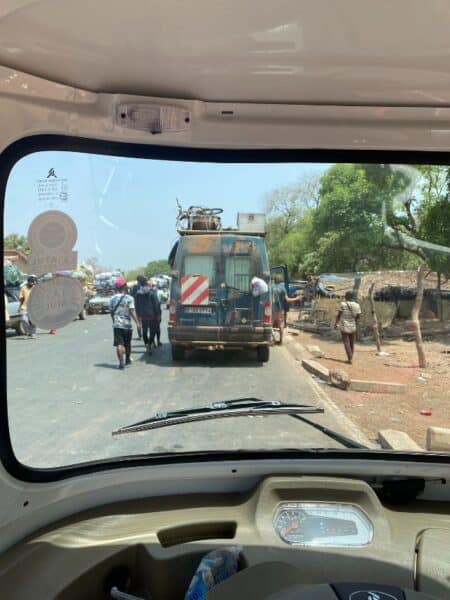
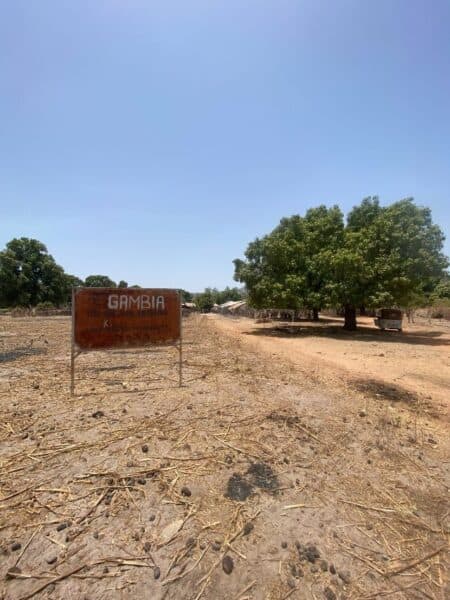
Border crossings in Africa are an experience to say the least. For the most part, I found them entertaining, and we usually passed them easily enough. I think the novelty of arriving in a tuk-tuk put everyone in good spirits.
They are busy, bustling hubs of activity. You’ll find plenty of food stalls and money changers wandering along the streets. It’s a good place to stock up on some snacks.
Pro tip >> For the money-man, look for a man with a bum-bag or a small back-pack standing on the roadside. You can shout out the window, “money change” and someone will come running.
The key is to be patient and have all your paperwork ready. And, don’t be worried!
You’ll need passports, vehicle registration, insurance documents, and any other official documents for that country, e.g., visas and laissez-passers.
Types of Checkpoints
At most border crossings, there are multiple checkpoints to go through. Sometimes they’re lined up one after the other, but more often than not, they’re spread out.
Crossing can be a long process, or it can be surprisingly quick – you never really know. The longest we waited was about four hours, so always allow plenty of time.
- Immigration Checkpoint: Both countries will have their own immigration building, and are checking passports, visas and sometimes health checks. Make sure you get both your entry and exit stamps.
- Customs Checkpoint: For vehicles, they’ll be checking the Carnet de Passage or issuing a Laissez-Passer/Temporary Import Permit (TIP). Luggage searches and potential import taxes are also handled here.
- Police Checkpoint: General security checks where they may ask for your passport, vehicle papers, or driving licence.
- Military Checkpoints: Found in regions with security concerns or near conflict zones. They might check your passport, travel itinerary, and photography equipment (especially drones).
Pro tip >> You are not allowed to take drones into Morocco. I learned the hard way after they confiscated mine at the border. However, since I didn’t know, I willingly declared I had one; they most likely wouldn’t have found it.
Unofficial Fees
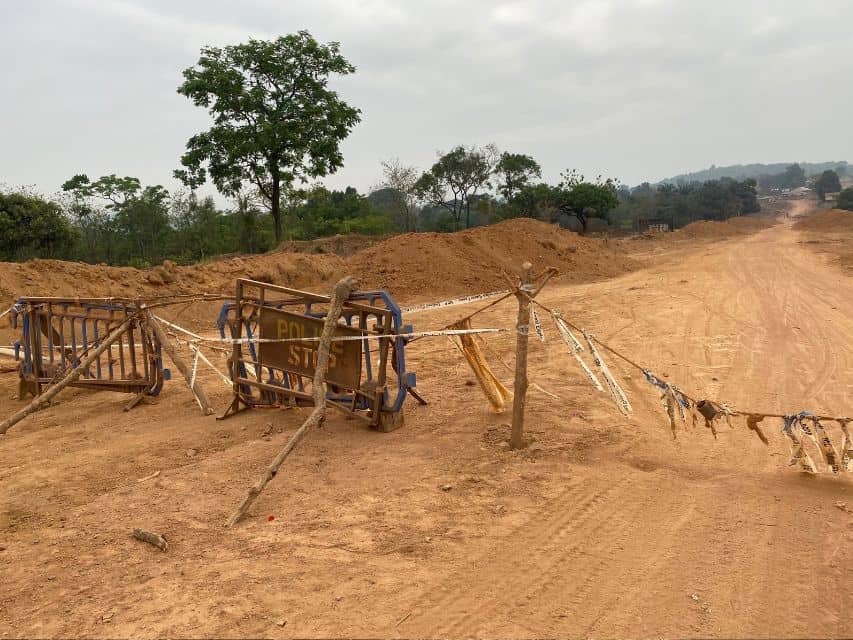
To be honest, we ran into more corrupt officials at roadside checkpoints than at actual borders. If you don’t have all your paperwork in order, expect to pay ‘fees.’ Carrying small bills helps, we got caught out in Guinea a few times for not having the Laissez-Passer.
That said, playing dumb also works wonders. Thanks to the language barrier, we somehow managed to cross the Guinea-Senegal border by pretending we didn’t know what the Laissez-Passer was.
Oh, and if you’re a solo female traveller or left alone with border officials, be prepared for phone number requests, email exchanges, and possibly even marriage proposals! I gave out my number many times to keep the officials ‘sweet’ – much to my dad’s amusement (and relief) that we didn’t have to pay ‘unofficial fees’ at the borders.
It’s all innocent behaviour, and it’s unlikely you’ll ever see these people again. From experience, a smile and a bit of humour will get you through the borders much faster than frustration ever will.
Step 5: Accommodation Types
✔️ Wild camping vs. hostels vs. guesthouses – each offers a different experience.
✔️ Research safe areas for overnight stops.
✔️ Use the iOverlander app to find campsites and lodgings.
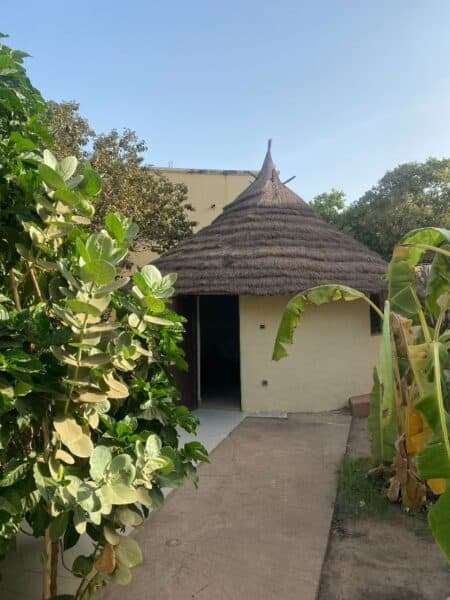
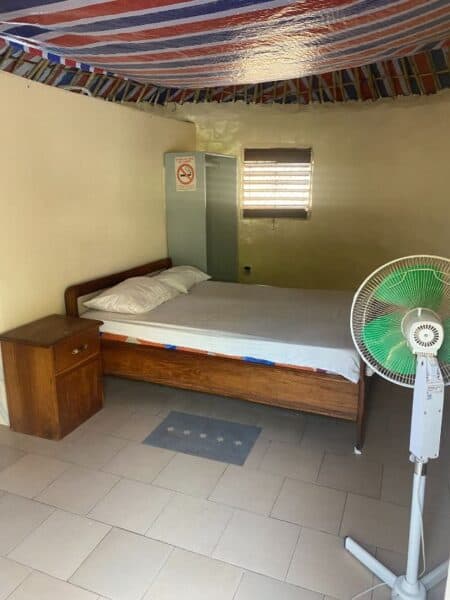
Accommodation in West Africa can be hit or miss. You might find some lovely places, but there are also some terrible ones. There’s no consistent standard, and just because you’re paying more doesn’t mean you’re guaranteed better quality!
Standards vary wildly, especially the further inland you go. Options become fewer, and prices are whatever the owner says they are. Sierra Leone and The Gambia were definitely the cheapest places I stayed in terms of both cost and quality.
Finding a fully functional hotel is rare—there always seems to be something broken or half-built. Air-con is a luxury (if you can find it), and electricity isn’t always available 24/7. Some places run a generator at night, but you’ll likely have to pay extra for petrol.
That said, one of the best things about overlanding West Africa is wild camping. There are safe places to camp, and the iOverlander App was a lifesaver for finding campsites, guesthouses, and other places to stay.
If you’re not camping, you’ll mostly be staying in hotels and guesthouses. Guesthouses are usually family-run, but in Africa, that could mean anything from a room in someone’s house to a small apartment-style room.
The further south you go, the worse the accommodation gets – though there are some gems. We found a surprisingly lovely hostel in Kabala, Sierra Leone, but it was also there that I witnessed someone getting whipped for the first time – an incredibly upsetting experience.
Step 6: Booking Attractions & Excursions
✔️ Pre-booking is nearly impossible outside major cities.
✔️ Be flexible – activities depend on the season and road conditions.
✔️ Ask around – guides are everywhere!
West Africa works in its own way. It’s wild, not just in terms of wilderness but also in the way things operate. For most of us, the way things work here is entirely different from what we’re used to back home.
There’s really no point in booking attractions ahead of time. Anything can happen during your trip – you might get stuck somewhere for days. Remember, your itinerary should have a route but stay as flexible as possible with dates.
When it comes to booking activities, your best (and often only) option is to do it once you arrive. The easiest way is to ask your hotel. Nine times out of ten, they’ll have a friend who’s a “guide” – because, honestly, everyone seems to be a guide in Africa!
In some places, like where we stayed in The Gambia, I met plenty of people claiming to be guides, just by walking along the beach. It’s up to you to decide who seems legit and trustworthy enough to take you on an adventure.
That said, be cautious with street or beach guides – some are great, while others might overcharge and likely to be unlicensed, so always agree on a price upfront.
How to Find Official Guides
Finding an official guide can be tricky, as many tours and excursions are arranged informally, but there are ways to do it.
National park offices and official tourism boards often have licensed guides, and reputable hotels and lodges can connect you with trusted locals. If asking around, bigger hotels are a safer bet for vetted guides.
Social media groups and traveller recommendations are also a massive help in finding a reliable guide, licensed or not.
And don’t stress about missing out – there will always be someone who can take you wherever you want to go!
Step 7: Budgeting
✔️ Fuel costs vary – factor in long stretches without petrol stations.
✔️ Carry emergency cash – ATMs can be unreliable.
✔️ Plan for unexpected expenses (bribes, breakdowns, extra visa fees).
✔️ Some countries rely on cash; others accept mobile money transfers.
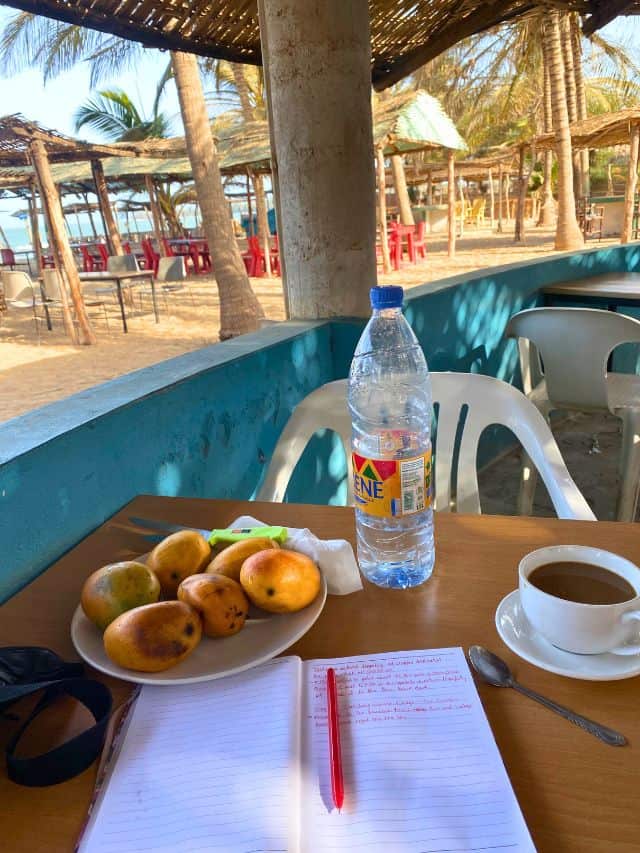
How much does overlanding cost? Budgeting for your trip depends on many factors – how long you’re going for, your accommodation choices, the number of travellers, your vehicle type, and even where you’re from.
There’s no way to know exactly how much you’ll spend, but here’s what I found:
- Hotels were the most significant expense, ranging from £15 to £100 depending on location and type.
- Fuel was cheaper than at home, but you’ll be covering thousands of miles, so it adds up. Check Global Petrol Prices for current rates. Fuel stations are few and far between in remote areas, so it’s a good idea to carry extra fuel.
- Food can be incredibly cheap. Roadside stalls and local restaurants often cost next to nothing. If you’re eating in hotels, try to get breakfast included, as meals there tend to be pricier. Street food is another budget-friendly option, but be cautious of belly bugs.
Something to keep in mind—while much of West Africa is impoverished, travelling as a tourist can still be expensive. Even on a budget, we ended up spending around £3,000 a month overlanding West Africa.
Contingency Fund
You’ll need to create a contingency fund for those unexpected expenses. There is always a bribe to be paid, tips to be given, break downs to cover and just additional fees here and there. A reasonable contingency budget for overlanding West Africa should be 15-25% of your total budget.
- 15% if you’ve planned well, your vehicle is in excellent condition, and you’re confident with unexpected situations.
- 20-25% if your route includes more remote areas, you’re using an older vehicle, or you want extra flexibility for emergencies, bribes, repairs, or sudden changes.
Costs in West Africa can be unpredictable – fuel shortages, unexpected repairs, visa fees, and even “unofficial fees” at checkpoints can quickly add up. Having a solid contingency fund ensures you’re covered without stress!
Tips For Overlanding West Africa

iOverlander App is a Must!
I’ve mentioned this before, but seriously – this app is a game-changer. I love Google Maps and use it for most of my travels, but it just didn’t cut it in West Africa. iOverlander, on the other hand, was fantastic. It’s a community-based app where travellers share points of interest and reviews on accommodations, garages, attractions, police checkpoints, and even poor road conditions.
Keep Your Vehicle Serviced
Vehicle maintenance is key to a successful road trip. The extreme heat can cause engines to overheat, so keep an eye on coolant levels. Rough roads will shake everything loose – regular checks help prevent breakdowns. Potholes are brutal on tyres, so drive carefully when road conditions worsen.
Get Local SIMs
Local SIM cards are cheap and offer better coverage, so it’s worth picking one up in each country. Wi-Fi is unreliable in remote areas, so download maps and travel info in advance. While we never needed one, a satellite phone could be worth considering if you’re heading to very isolated regions.
When crossing borders, I found that mobile data often dropped instantly. You can usually buy SIMs at the border, but in remote areas, this isn’t always possible. To get around this, I use Airalo. to pre-purchase an eSIM, which I activated on arrival. It’s pricier than a local SIM but a lifesaver as a backup until I could get a local SIM.
Power Banks are Essential
You will need power banks. We had two – my trusty one that I’ve used on all my travels and a solar-chargeable one. Both failed.
My main power bank overheated and stopped charging between Senegal and Western Sahara. The solar one sounded great in theory, but it was cheap and unreliable. I recommend investing in good-quality power banks that can handle extreme heat.
Learn a Few Basic French Phrases
Most of West Africa speaks French alongside native languages. English is only widely spoken in Sierra Leone and The Gambia.
While this can sometimes work in your favour – like at border crossings or police checkpoints – it’s still helpful to know some basics. Even simple greetings and introductions can help create a friendly atmosphere and make tricky situations smoother.
Always Have Extra Water & Food Supplies
Fresh running water is hard to come by, and everything you drink needs to be bottled or filtered. Always stay fully stocked and buy water in bulk whenever you can.
Food is easy to find in cities and villages, but if you’re heading inland for long stretches, markets become scarce. Small villages mainly sell snacks, and unless you stop at a restaurant, options are limited. Stock up on non-perishables for a bit of sustenance.
Street food is cheap and delicious, but hygiene can be questionable. Locals have stronger stomachs, so it’s very easy to get sick. Carry antibacterial gel – I felt like my hands were constantly dirty, and washing facilities are often nonexistent.
Wear A Headscarf/Turban
This isn’t just for respect in Islamic communities, it’s also practical. The sun and wind can be brutal, and a scarf provides protection. Riding in our tuk-tuk, I found it essential. Plus, I felt more comfortable in cities, attracting less attention and making conversations with locals easier.
Prepare For Checkpoints & High Prices
If you think Africa is budget-friendly, think again. It’s expensive for tourists.
Fake police stops and inflated tourist prices are common, so stay firm but polite. Some border officials may ask for “fees”, some are legitimate, others are not. It’s not always easy to tell. They usually wear uniforms, but not always. Expect ropes across roads, metal gates, and bollards blocking access. Some checkpoints are official, and others are just looking for a bribe.
Plan Your Trip During Dry Season
If you’re overlanding from Morocco down through Mauritania and northern Senegal, you’ll mostly avoid heavy rains no matter what month of the year you travel. But once you get further into southern Senegal, Guinea, and beyond, you’ll start feeling the full force of the West African monsoon if you arrive after May.
I don’t recommend overlanding West Africa during this period. Instead, plan to arrive in southern Senegal for a month into the dry season (to allow the roads to dry up), around the end of November.
Climate & Weather: When Is The Best Time To Go Overlanding In West Africa?

I’m generalising, here, as there are many countries to cover, but overall, the best time for overlanding West Africa is during the dry season, which naturally runs from November to April.
During this time, roads are more accessible, and river crossings are less risky. However, temperatures can be high, especially in desert areas, so it’s important to stay prepared for the heat.
The wet season, typically from May to October, varies slightly by country but generally brings heavy rains that can turn dirt roads into mud pits, making travel slow or even impossible in remote areas.
Western Sahara, Mauritania, and northern Senegal don’t really have a wet season like the more tropical parts of West Africa. These are part of the Sahara Desert, so rainfall is minimal year-round. When it does rain, it’s usually brief and unpredictable.
The actual wet season in West Africa starts south of the Sahel – from around southern Senegal, Guinea, and onwards down the coast. The further south you go, the more intense the rainy season gets, peaking in places like Sierra Leone, Liberia, Ghana, and Nigeria between June and September.
Another factor to consider is the harmattan, a dry, dusty wind from the Sahara that blows across West Africa between December and February. A visit to Sierra Leone during this time is best as it reduces humidity and keeps temperatures cooler. However, it can also bring thick dust that can affect visibility and air quality in countries further north.
Sandstorms are more common in the Sahel region, particularly in Senegal and Mali, and can be severe. Carrying protective gear like goggles and face coverings can help.
Is It Safe To Travel To West Africa?

I can only talk from experience, and in my experience overlanding West Africa is safe. However, that doesn’t mean you should skip safety precautions and not stay on your toes. It also depends on where you go and how you travel.
Many parts of West Africa are safe for travellers, but some regions do have security concerns.
One thing I noticed is that theft is rife, however actual violent crime is very unlikely. Theft is most common in larger towns and cities, and certain border areas have instability. Places with large crowds, like markets, are also places to keep your wits about you. Make sure you keep all valuables secure and never pull out large wads of cash.
Always separate your daily spending from your main budget. In fact, separate your main budget into separate locations within your vehicle as well.
Research up-to-date travel advisories, but don’t let fear hold you back, locals are incredibly welcoming, and most travellers have a fantastic experience. Common sense goes a long way: avoid travelling at night, be discreet with valuables, and stay aware of your surroundings.
The Wrap: Overlanding West Africa
When I was planning my trip, I struggled to find detailed information online, and even reading overlanding West Africa reviews meant I had to piece together information. That’s why I’ve shared everything I learned from our journey, to help you know exactly what to expect.
My dad and I had an incredible, once-in-a-lifetime experience overlanding West Africa that brought us closer. Whoever you choose to take on this adventure with you, it’s sure to be unforgettable.
Just remember, overlanding West Africa is truly off the beaten path. You’ll face challenges, but the rewards are more than worth it.
Thank you for reading my post. You can find my latest stories and articles on my blog homepage here. Follow me on Instagram (#igoa.adventure) and Facebook to see what I’m getting up to and where my next upcoming trips are!

Helpful? Please help me share 🤗