

Bali has a funny reputation: it’s one of the most famous islands on the planet… and yet it can still be weirdly affordable once you land.
So, why is Bali so cheap? It mostly comes down to Indonesia’s lower cost of living, cheaper labour, and a favourable exchange rate.
Add in a ridiculous amount of tourism competition, and suddenly you’ve got £2 warung meals, affordable scooters, and accommodation that would cost triple back home.
But here’s the twist: Bali is only “cheap” if you travel like it is. Do beach clubs, Western brunch every day, private drivers, and villa life… and your budget can disappear faster than a scooter in Canggu traffic.
I’ve lived in Bali for months, so I’m keeping this practical: the real reasons behind the prices, the real costs you’ll pay, and the easy ways to keep your budget under control.
Updated for 2026: Based on real on-the-ground costs (plus what I’ve personally paid). Costs still vary by area; Canggu/Seminyak/Ubud are pricier than the north/east of Bali.
P.S. Get to know more about me and my blog here.

✈️ MAKE TRIP PLANNING EASY!
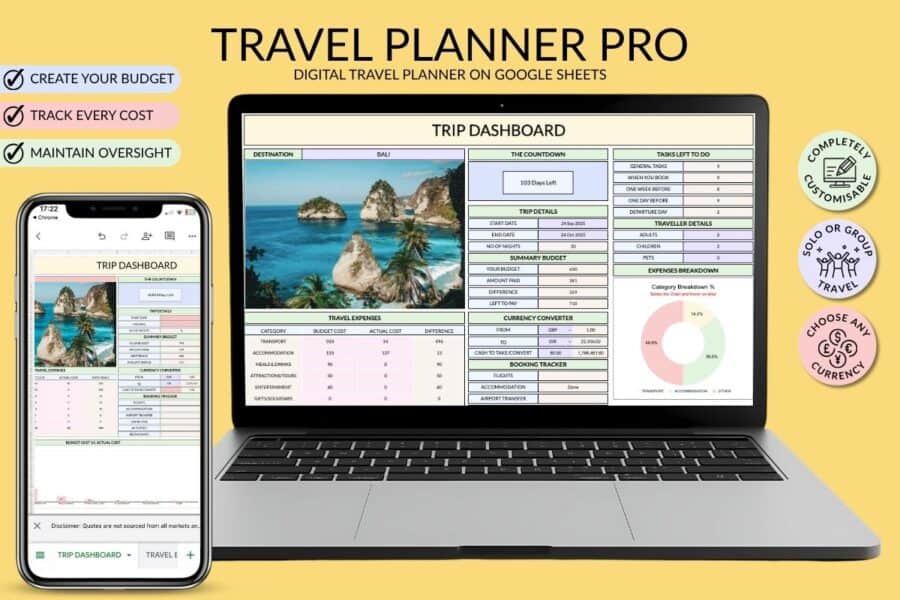
The All‑In‑One Digital Planner is your simple way to keep every trip organised. Track bookings, plan your days, manage your budget, and tick off checklists – all in one colour‑coded Google Sheet you can use again and again. 🤗

Real Costs at a Glance: How Much Does Bali Actually Cost?
So, is Bali cheap? Yes, Bali can be ridiculously affordable or it can turn into a “how did I spend that much?” holiday if you live on brunch, beach clubs and day tours.
If you’re only here for the quick answer: Bali can be as low as £20–£35 / $25–$45 per day backpacking, or £45–£90 / $55–$110 per day mid-range; and it jumps fast if you want luxury.
Pro tip: If you want the best value, the north and east (Amed, Pemuteran, Sidemen) usually feel noticeably cheaper than the south.
🌟 My top pick >> Join a snorkelling day trip in Nusa Penida and swim in bright blue tropical waters alongside sea turtles and manta rays, then visit Kelingking Beach for the perfect photo.
*I’ve included some prices in IDR plus rough £/$ conversions so you can budget before you land.

Daily costs (mid-range holiday)
- Accommodation: £40 / $50 per night
- Meals: £2–£8 / $3–$10 per meal
- Drinks: £1.50–£10 / $2–$12 each
- Transport: Scooter £4-£8 / $5-$10 per day or Private driver (for two) £50 / $66 per day
- Activities: £25–£50 / $30–$60 each
- Beach Club (day bed): from £135 / $180
The biggest cost is usually getting to Bali, once you land, day-to-day spending can be low.
⭐ BOOK: Spend an unforgettable sunrise on the summit of Bali’s Mount Batur by booking the exact tour I did. Breakfast was included: eggs cooked with steam from the volcano’s fissures.
Weekly spend (rough guide)
This is spending money excluding shopping + alcohol:
- Backpacker week: £55 / $70 (accommodation) + £30 / $35 (transport)
- Mid-range week: £280 / $350 (accommodation) + £95 / $120 (transport)
- Luxury week: £1,700+ / $2,160+ (accommodation) + £250+ / $320+ (transport)
Quick budget reality check
If you’re trying to keep Bali cheap, ask yourself:
- Are you eating at warungs most days, or going to Western cafés for every meal?
- Are you renting a scooter or relying on drivers/taxis?
- Are you doing free nature days (rice fields, walks, beaches) or paid tours every day?
- Are cocktails involved? Because that’s how budgets mysteriously evaporate.

Want to budget your Bali trip properly?
Grab my free Bali Budget Calculator and plug in your accommodation, transport, meals and activities to get a realistic daily total.
❤️ FOLLOW ME ON SOCIALS!
I hope you’re finding this guide helpful! Follow me on Instagram (@abigailcarolina.dalton) and Facebook for daily stories, travel tips and photo dumps!
Your support means the world to me. Thank you 🤗

Why Is Bali So Cheap? The Real Reasons It’s So Affordable

So, why is Bali so cheap compared to other tropical destinations?
It mostly comes down to one unglamorous truth: Bali runs on Indonesian prices, and Indonesia has a much lower cost of living than the UK, Europe, Australia, or the US.
That filters into almost everything you pay for as a traveller: meals, transport, laundry, massages, day-to-day services, the lot.
But there are a few key reasons Bali stays affordable (even with how popular it is):
1. Lower wages = lower prices for day-to-day life
A huge chunk of what you pay for on holiday is labour: cooking, cleaning, driving, building, serving, guiding, fixing, delivering, etc.
In Bali, wages are lower than in Western countries, which means services are cheaper, whether that’s a £2 warung meal, a £5 laundry bag, or a budget-friendly scooter rental.
2) The exchange rate makes your money feel “bigger”
The Indonesian rupiah is weaker than the pound and the dollar, so your cash stretches further.
It’s one of the biggest reasons Bali feels like good value, especially if you’re arriving from places where a coffee costs £4–£5 and a taxi costs your entire life savings.
3) Lots of things are produced locally

Bali (and Indonesia generally) can grow or source a lot of what it uses: rice, fruit, veg, spices, eggs, fish, coffee, etc.
When food doesn’t need to be imported from far away, it’s usually cheaper, and that’s why you can still eat really well for not much money if you stick to local places.
4) Tourism competition is intense (especially for accommodation)

Bali has an absurd amount of accommodation: homestays, guesthouses, villas, hostels, and boutique hotels.
Since there is so much choice, places compete hard on price and deals like breakfast included and discounts for longer stays.
This is a big reason you can often find accommodation that feels like a bargain, even though Bali is one of the most visited islands on the planet!
5) Bali is cheap… if you travel like it’s Bali
Here’s the part people forget: Bali is affordable when you live like you’re in Indonesia – warungs, local cafés, scooters, simple hotels, and picking your splurges.
But if you spend your whole trip in western brunch spots, beach clubs, private drivers, imported wine, and “Instagram tours”… Bali can stop being cheap very quickly.
So Bali is cheap, but it’s also the easiest place ever to accidentally turn into an expensive holiday without even meaning to.
⭐ BOOK: The best of Ubud on a private guided tour. This is my favourite option for exploring iconic spots such as the Ubud Sacred Monkey Forest, the Tegallalang Rice Terrace, the Tirta Empul Temple, and a waterfall.
How to keep Bali cheap
- Warungs + street food most days
- Pick 2–3 paid tours, and DIY the rest
- Stay outside the hotspot centre (still close, just not in the chaos)
- Limit beach clubs + cocktails
- Use scooter/Grab/Gojek, driver for long days
Enjoying this blog? All my content is free, but I do spend a lot of time in coffee shops. If you’re finding my content helpful and would like to buy me a coffee, I’d love that! Thank you 🤗
What Costs What in Bali? A Quick Breakdown
If you’re still wondering why Bali is so cheap, this is what it looks like in real life.
The prices can swing depending on where you stay. For example, Canggu and Seminyak tend to be pricier than places like Amed, Pemuteran, or inland Ubud.
Nevertheless, these ranges are a solid starting point for budgeting:
Accommodation (per night)

Accommodation feels like a bargain in Bali because the running costs are lower, and the competition is intense, especially in popular areas.
That’s why you can often find a genuinely lovely stay for a price that wouldn’t even cover a basic room back home.
- Hostels: $5–$10 / £4–£8+ a night – personally, I’d aim for the top-end of this.
- Homestays: $10–$20 / £8–£15+ a night – these are simple and usually great value.
- Hotels: around $50 / £40 a night for a genuinely nice room.
- Luxury villas/resorts: $130+ /£100+ a night, and it goes way up from there.
Pro tip: Small budget-saver that actually matters, places with breakfast included can shave off daily spend without you even trying.
🏨 Accommodation // Where To Stay In Ubud // 9.3+ ratings
Budget-friendly: Nyoman Sandi Guest House | Mid-Range: The Wakanda Resort | Luxury: Padma Resort Ubud
Food & drink (per item / per meal)

Bali is cheap when you eat like a local: warungs, simple cafés, and local dishes.
But the minute you switch to daily brunch spots, imported ingredients, and sunset cocktails, your “cheap Bali” budget will start to wobble.
Alcohol is the sneaky budget killer. Even if it’s cheaper than home, it’s pricey compared to everything else in Bali.
- Warung meal: 25,000–60,000 IDR (£1.50–£4 / $2–$5)
- Street food: 20,000 IDR often under $1 (£0.75)
- Local coffee: 40,000 IDR around $2.6 (£1.90)
- Western café/restaurant mains: around 130,000 IDR ($8–$15+ / £6–£11+)
- Bintang beer: from 40,000 IDR from $2.35 (£1.80)
- Cocktails: decent start from 120,000–180,000 IDR (£6–£9 / $8–$12), this is where “Bali is cheap” starts to crumble.
Transport (typical costs)

Scooters, cheap Grab/Gojek rides, and low fuel costs make day-to-day transport surprisingly affordable.
Drivers and tours cost more, but they can still be good value if you’re doing long distances or splitting the cost with someone.
- Scooter rental: from 70,000–150,000 IDR/day (£4–£8 / $5–$10)
Pro tip: Newer scooter rentals can be closer to 150,000 IDR and if you want to rent monthly, a good + new scooter is around 1.5Mil IDR, that’s around $88/month (£65/month). You can find cheaper, but quality lowers.
- Grab/Gojek rides: typically very cheap for short hops. Cost varies by distance/time, but often far less than you’d expect compared to home.
- Private driver: estimate costs,a full day (around 10 hrs) is about $100 (£75); a half day (6 hrs) works out about $70 (£50) for two people.
- Public bus: $1–$5 (~£0.75–£4) per journey, but slow and not the vibe for most travellers.
Pro tip: To use, Grab or Gojek, which is a ride hailing app, you’ll need to download the app. You can set to payment up via card or select to pay cash when booking if you prefer.
⭐ BOOK: The easiest options are a private driver or shuttle minivan for airport transfer and day trips. Once at your base, renting a scooter locally is the easiest way to get around.
Activities (what you’ll actually pay)

Activities are where Bali quietly tests your self-control.
Day-to-day life can be cheap, but tours and “special experiences” stack up fast, especially in the south where everything is packaged and priced for visitors.
The good news is you don’t need to do paid activities every day to have an amazing trip; Bali’s best bits are often the simple ones like sunset beaches, rice field walks, temple wanderings and scooter exploring.
My rule is to pick a couple of “big spend” days (like Mount Batur or snorkelling around the Nusa islands), then balance them out with low-cost or free days so your budget doesn’t spiral.
Bali’s daily life can be cheap but paid experiences add up fast if you stack them. Here are some example prices:
- Dance shows: around £5 / $7
- Private-style day tours (Ubud style): around £15 / $20+
- ATV/quad biking: from £20 / $25 – (my ATV tour review, here).
- Mount Batur (sunrise hike tour): from £20 / $25 – (my sunrise hike review, here).
- Nusa Penida snorkelling: around £25 / $30
- Silver-making class: around £25 / $30
- Uluwatu Temple + Kecak dance tours: from £26 / $33
- “Instagram highlights” full-day tours: around £35 / $45
The Twist: When Bali isn’t Cheap

Bali can be cheap, but it’s also one of those places where you can accidentally spend a fortune without even doing anything that wild.
If you’re eating at Western cafés every day, booking private drivers constantly, staying in villa-hotspot areas, and treating beach clubs like your daily hangout, Bali stops being budget-friendly pretty quickly.
It’s not that Bali is suddenly “expensive” in a Europe way, it’s that the tourist bubble has its own pricing, and it adds up fast.
This is when people start asking: is Bali expensive?
I’ve also found the Bali isn’t cheap when you’re chasing the Instagram version of it.
Places like Ubud, Canggu, Uluwatu and Seminyak are where prices climb the quickest, because you’re paying for trendiness, convenience, and demand.
Add in cocktails, imported wine, boutique gyms, fancy coffee, and a few “must-do” tours, and your cheap Bali holiday can quietly turn into a mid-range splurge!
Bali gets pricey when you:
- Eat Western most of the time, this includes brunch cafés, smoothie bowls, and steak dinners
- Drink alcohol regularly, cocktails, shots and wine are especially expensive
- Stay in popular areas like Canggu/Seminyak/Uluwatu during peak season
- Book private tours + drivers daily instead of mixing in DIY days
- Choose villas over guesthouses, especially in hotspot areas
- Do lots of paid activities. For example, visiting Nusa Penida, going on ATV rides, and “Instagram tours”, plus beach clubs will add up fast.
Pro tip: Keep Bali cheap by mixing it up. Do a couple of paid “big days”, then balance them with warung meals, free beach sunsets, rice field walks, and DIY exploring. Bali is affordable when you choose it to be.
Negative Impacts of Bali Being “Cheap”

Bali being affordable is brilliant for us, but low-cost tourism has a messy side, and I just want to mention it here quickly.
In the busiest areas, the pressure of mass tourism shows up as traffic, overcrowding, and pollution, especially during peak season and rainy season when some beaches get hit hard with plastic wash-up.
Cheap prices typically mean low wages for locals working in hospitality, and fast development that changes the feel of certain places.
It doesn’t mean you shouldn’t go, it just means it’s worth travelling a bit more thoughtfully.
You can do this by supporting local businesses where you can, carry a reusable bottle, and don’t treat Bali like a bargain theme park.
You’ll have a better trip, and it’s kinder to the island too.
Real-Life Example Days in Bali: Cheap vs “How Did I Spend That Much?”

A cheap Bali day (backpacker)
You can absolutely have a proper Bali day without spending much, but it usually means local food, simple transport, and one low-cost, paid activity max.
- Breakfast: free hotel/hostel breakfast (or eggs + coffee from a local place 90,000 IDR)
- Scooter rental + fuel: 100,000 IDR
- Warung lunch: 40,000 IDR
- Fresh Juice: 30,000 IDR
- Entry to a waterfall/temple: 15,000 IDR
- Warung dinner: 40,000 IDR
- A couple of Bintangs: 80,000 IDR
Total: roughly 395,000 IDR. Thats about £20 / $25 per day.
A mid-range Bali day (comfortable, not flashy)
This is the sweet spot I think most people actually want: you get a bit of Bali comfort (nice café, a proper activity, and a decent dinner), but you’re not haemorrhaging money on beach clubs and constant taxis.
- Breakfast/brunch + coffee: 150,000 IDR
- Scooter rental + fuel: 100,000 IDR
- One paid tour: 550,000 IDR
- Lunch (in a warung): 60,000 IDR
- Dinner: 200,000 IDR
- A couple cocktails: 160,000 IDR (happy hour)
Total: around 1,220,000 IDR. That’s about £60 / $75 per day.
An expensive Bali day (the one that sneaks up on you)
Bali stops being cheap the second you do the “South Bali lifestyle” version of the day – brunch, beach clubs, tours, and cocktails.
- Breakfast/brunch + coffee: 150,000 IDR
- Grab/Gojek rides (a few trips locally): 80,000 IDR
- Private driver / day tour for two: 1.1 mil IDR
- Finns Beach Club (entry + daybed/min spend): 3.2 mil (varies wildly)
- Dinner: from 250,000 IDR
- A couple of cocktails: 240,000 IDR
Total: about 5,020,000 IDR+. That’s £250 / $310 per day.
The honest takeaway
Bali is cheap, but it’s cheap when you travel like you’re in Indonesia (warungs, scooters, simple stays, local activities). The minute you travel like you’re on a Western-style holiday (private drivers, beach clubs, cocktails, boutique cafes), Bali prices jump fast.
Final Recap: Why is Bali So Cheap?
Bali feels cheap because the everyday basics can be genuinely affordable.
Local food is filling and low-cost, short transport is easy, and entry fees for a lot of sights are still “small money” compared to most holiday destinations.
Add in the exchange rate and the fact you can still find decent stays for a fraction of what you’d pay back home, and it’s no wonder people land in Bali and feel rich.
But Bali is only “cheap” if you travel with a bit of intention.
The moment you start living on smoothie bowls, private drivers, beach clubs, villas in hotspot areas, and constant tours, it stops being budget-friendly fast.
The good news is you can mix both without ruining your bank account – do a couple of splurge moments, then balance it with warungs, free beaches, scooter days, and quieter parts of the island where your money stretches further.
If you’re planning a trip and want Bali to stay affordable, the simplest rule is: eat local, base yourself smart, limit booze, and don’t pay “tourist convenience prices” every single day.
Do that and Bali really is one of the best-value tropical trips out there.
Thank you for reading my post. You can find my latest stories and articles on my blog homepage here. Follow me on Instagram (@abigailcarolina.dalton) and Facebook to see what I’m getting up to and where my upcoming trips are.

Helpful? Please help me share 🤗
FAQs: Why is Bali so cheap?
Why is Bali so cheap compared to the UK/Europe?
Because Indonesia has a lower cost of living, so things like labour, rent, and local food cost much less than they do in the UK and Europe. Add the exchange rate and your money stretches further, which is why Bali feels so affordable once you land.
Is Bali still cheap in 2026?
Yes, Bali is still cheap in 2026, but it depends where you stay and how you travel. Local warungs, guesthouses, scooters and simple day trips are still great value. But popular areas (especially Canggu/Seminyak/Ubud) have pricier cafes, villas, and tourist-focused activities than they used to.
What’s the biggest thing that makes Bali “not cheap”?
Lifestyle creep: beach clubs, cocktails, Western brunch, villas in hotspots, private drivers every day, and tours back-to-back. Bali isn’t expensive by default, it becomes expensive when you do the “Instagram itinerary” version of it.
Is Bali cheaper than Thailand or Vietnam?
It can be, but not always. Thailand and Vietnam often win for super-cheap street food and transport, while Bali wins for affordable accommodation (especially mid-range) and how easy it is to live well on a budget. In Bali, the gap between “cheap” and “boujee” is huge; your choices matter more than the country.
